
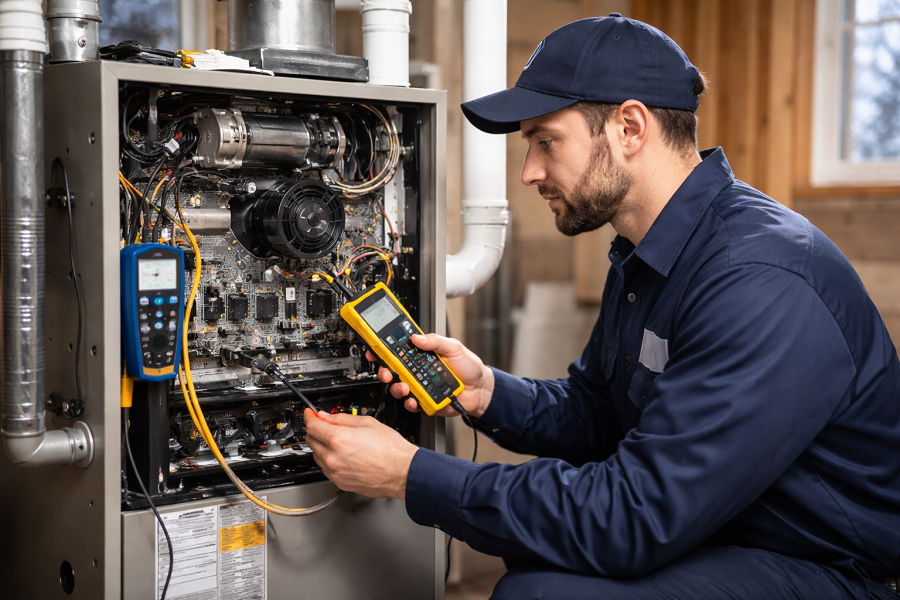
Furnace Troubleshooting is the fastest way to identify common heating problems, restore warmth, improve furnace efficiency, and avoid costly furnace repair emergencies during Toronto’s harsh winter months.
- Start with simple troubleshooting by checking your thermostat settings, furnace power, and air filters—over 80% of no-heat calls are solved with these fast steps.
- Replace 1″ furnace filters every 1–3 months to boost airflow and efficiency, preventing up to 50% of service calls caused by dust buildup.
- Recognize urgent warning signs—strange odors, electrical issues, or persistent cycling—and call a 24/7 HVAC pro for immediate, safe solutions.
- Know when to stop DIY fixes—leave repairs involving gas, ignition, or exposed wiring to certified technicians to protect your home and furnace warranty.
- Seasonal maintenance is essential—a professional tune-up each autumn and filter checks every season can extend furnace life up to 20 years and prevent sudden breakdowns.
- Consider replacement if your furnace is 15+ years old, needs frequent repairs, or is driving up bills—modern systems can cut energy use by 30% and unlock Ontario rebates up to $1,000.
- Leverage local GTA expertise—trusted brands like BobbyAir offer 24/7 service, transparent diagnostics, and warranty-backed installations for true peace of mind.
Take action on these furnace fundamentals now and enjoy reliable, energy-efficient warmth all winter. For deeper troubleshooting steps and expert-backed solutions, dive into the full article.
Introduction
Imagine waking up in the heart of a Toronto winter—outside it’s -20°C, but inside your home, the air is cold and your furnace is silent. For thousands of GTA homeowners each year, that sudden “no heat” moment is more than a nuisance—it’s a full-on emergency.
If you’ve ever found yourself frantically searching for answers or dialing an after-hours repair line, you’re not alone. Furnace breakdowns account for nearly 80% of winter emergency HVAC calls in North York, Oakville, and surrounding regions. What’s worse? Many of these stressful situations are caused by a small set of critical issues—most of which can be identified (or even fixed) within minutes, if you know what to look for.
What can fast, effective furnace troubleshooting actually do for you?
- Restore warmth and comfort quickly—often without waiting for a technician
- Prevent spikes in energy bills by catching small faults before they grow
- Avoid safety risks tied to gas or electrical problems
- Gain peace of mind, knowing you’ve acted before an issue spirals
The reality: Toronto’s unpredictable winters put extra pressure on every heating system. From busy families with young kids to property managers responsible for entire buildings, the ability to keep your furnace running safely isn’t just about convenience—it’s about protecting your home, your budget, and your loved ones in the harshest months.
Inside, you’ll discover:
- The most common furnace failures homeowners face in the GTA—and how to spot them fast
- A homeowner-friendly troubleshooting plan designed for Toronto’s unique climate and housing
- Key warning signs and safety red flags that demand a pro’s expertise
- Real fixes and prevention tips trusted by BobbyAir’s local team
You’ll also pick up strategies to extend furnace life and know exactly when it’s time to repair—or invest in a more efficient system.
Ready to feel confident the next time your furnace acts up? Let’s unravel what every GTA homeowner needs to know about staying warm, safe, and stress-free when furnace trouble shows up unexpectedly.
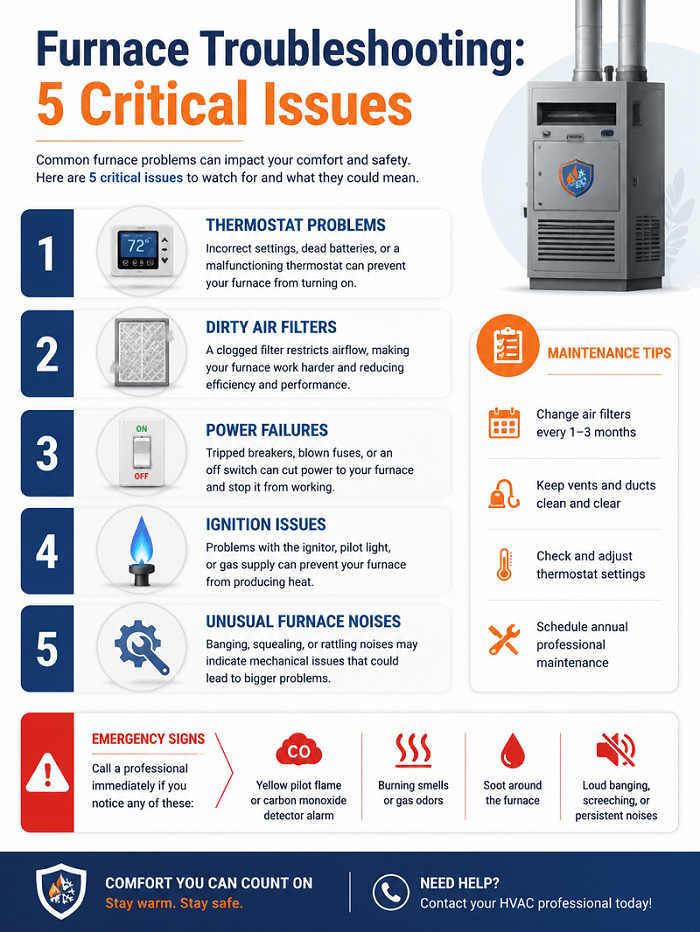
Understanding Common Furnace Issues: What Every GTA Homeowner Needs to Know
For homeowners across the Greater Toronto Area, furnace troubles are a fact of life—especially when winter hits hard. Every season, thousands of GTA families deal with sudden heating failures, soaring energy bills, or strange new sounds from the basement. Picture this: it’s a -15°C February morning and your furnace won’t kick in. That “uh-oh” moment can hit any household, regardless of the system’s age.
Why Are Furnace Problems So Common in Toronto?
Local climate plays a major role—Toronto’s harsh winters mean furnaces work overtime from November to April.
Frequent cycling, older homes, and a mix of gas and electric systems set the stage for wear and tear. Common patterns seen in many North York and Oakville homes include:
- Heavy furnace use (especially gas models) for 6+ months a year
- Combination of aging homes with older, less efficient units
- Quick seasonal changeovers stress thermostat and control systems
GTA properties range from historic bungalows with classic pilot-light systems to new condos relying on modern smart thermostats or heat pumps.
Key Warning Signs Every Homeowner Should Watch For
When a furnace issue pops up, fast action makes all the difference in comfort and cost.
Here are the most frequent symptoms that signal real trouble:
- No heat or furnace won’t turn on
- Air blowing, but it’s not warm
- Fan runs constantly, never shuts off
- Frequent on-off cycling (short cycling)
- New or loud noises: banging, rattling, squealing
- Burning or gas odors
If you catch these early, you can prevent emergency breakdowns and sky-high energy bills.
Why Timely Troubleshooting Matters
Ignoring furnace problems doesn’t just put comfort at risk.
- Delaying repairs can boost heating costs by up to 20% and lead to sudden, expensive failures (think $300–$1,200+ for emergency repairs)
- Unattended issues raise the risk of carbon monoxide leaks or fire hazards—especially on gas models
- During cold snaps, even a day without reliable heat puts your property and family at real risk
A quick visual check, filter change, or thermostat reset might solve simple issues. But, as many manufacturers warn, leave deeper repairs—like gas, wiring, and ignition work—to certified professionals to keep warranties and safety intact.
Homeowner Tip: Know When to Call for Help
Rapid troubleshooting saves money and stress.
If your unit shows persistent errors, smells of gas, or keeps short cycling despite basic checks—call a 24/7 GTA HVAC expert right away.
Toronto’s weather waits for no one, and a reliable furnace means peace of mind from fall to spring. Fast action and regular attention are your best defense against the next “why is it freezing in here?” moment.
Step-by-Step Homeowner Troubleshooting Framework
Is your furnace not working as expected? Before you make a late-night call, there’s a safe, systematic way to pinpoint common issues—no HVAC degree required.
This framework is designed specifically for GTA homeowners who need clear, immediate answers and value both comfort and safety.
Picture this: It’s -15°C, the kids are in their pajamas, and the living room is getting colder by the minute. Here’s what to do, step by step, before calling in the pros.
The Essential Troubleshooting Checklist
Run through these foundational checks—even experts say homeowners should start here. Each step can resolve the most frequent no-heat or weak-air issues in under five minutes:
- Thermostat settings:
- Confirm it’s set to HEAT mode.
- Raise the setpoint several degrees above room temperature.
- Replace batteries if the display is blank or dim.
- Power supply:
- Switch near furnace must be ON (often mistaken for a light switch).
- Check the furnace breaker or fuse at your main panel—reset as needed.
- Secure furnace access panels—many models won’t run if the panel isn’t closed.
- Filter & airflow:
- Replace standard 1″ filters every 1–3 months; more often if you have pets.
- Make sure all vents are open and not blocked by rugs or furniture.
- Gas supply (gas furnaces):
- Verify the gas valve is in the ON position (parallel to the pipe).
- Never proceed if you smell gas—this is an emergency.
- Manufacturer instructions:
- Always follow your furnace’s safety instructions—one missed warning label could mean a costly mistake.
“Nine out of ten Toronto furnace calls could be avoided with these basic checks—knowledge is power, especially in winter.”
When to Stop and Call a Professional
Not every furnace mystery should be tackled solo. Immediate help is needed if you experience:
- Signs or smells of gas leaks
- Frequent breaker trips or exposed wiring
- Persistent error codes or flashing status lights
If your system continues to fail after these foundational steps, professional service is the safest bet:
- Any situation that feels unsafe or risks voiding your warranty
- High heating bills even after filter and vent checks
- Odd noises (grinding, banging) or sudden shutdowns during operation
BobbyAir’s 24/7 emergency HVAC service gives Toronto homeowners peace of mind—help is always a call away.
For fast troubleshooting, start with this checklist. If the furnace still struggles or you notice anything hazardous, trust a certified pro to keep your comfort and safety front and center.
If your Furnace Troubleshooting efforts don’t restore reliable heat, our Furnace Repair Services team can quickly diagnose furnace problems, perform emergency furnace repair, and restore safe operation. Professional technicians can identify hidden issues that basic HVAC troubleshooting may miss, helping homeowners avoid costly damage and unexpected heating failures.
Top Five Critical Furnace Problems Solved Fast
When your furnace stops in a Toronto winter, every minute counts. These five issues account for over 80% of emergency calls in the GTA—and with the right steps, you can solve or accurately identify them in minutes.
1. Thermostat Failures and Erratic Controls
If your furnace won’t turn on, the thermostat fan runs non-stop, or the screen is blank, the issue often starts here.
Quick homeowner checks:
- Confirm the thermostat is set to HEAT (not “Cool” or “Off”).
- Raise the temperature setting 3-5°C above room temp.
- Replace batteries (if your model uses them).
- Set the fan to “Auto” for cycling or “On” for continuous airflow.
If the display works but the furnace never responds, or you see corroded/loose wires, it’s time to call a professional. Toronto homeowners frequently call with seasonal mode mix-ups—especially after the first cold snap. Snap a quick photo of your settings for easy reference.
“A blank thermostat can halt your furnace faster than a blizzard.”
2. Airflow Blockages: Dirty Filters and Blocked Vents
Weak airflow, short heating cycles, and higher bills? Start here.
Step-by-step actions:
- Turn off furnace power.
- Slide out and inspect the filter—replace if gray, dusty, or over 90 days old.
- 1″ filters: every 1–3 months
- Thicker filters: 3–12 months
- Walk your home and open all supply and return vents—don’t let rugs or furniture block them.
- Look for signs of ice or extreme heat; these may signal deeper issues.
If airflow stays weak or you see ice build-up, the problem could be a blocked coil or ductwork—that’s a job for a technician.
“A $10 filter swap can save a $300 repair.”
3. Power Loss: Diagnosing Dead Furnaces
No fan, no lights, total silence—this is usually electrical.
Immediate checks:
- Find the furnace switch near your unit. Make sure it’s ON.
- At the breaker panel, locate “Furnace” and reset a tripped switch.
- Make sure access panels are closed; many units have a safety cut‑out.
If the breaker keeps tripping or you can’t restore power, shut everything off and seek emergency assistance to avoid electrical hazards.
“A silent furnace can signal a simple switch issue or a critical electrical fault—always double-check before worrying.”
4. Ignition and Pilot Light Malfunctions
If the furnace clicks but won’t light or the pilot won’t stay on, several safe checks can help:
- Ensure the gas valve is ON (parallel to pipe).
- If comfortable, follow the manufacturer’s re‑lighting instructions for older pilot systems.
- For modern systems, a full power off/on reset can clear minor lockouts.
If you smell gas, hear hissing, or see a yellow, unsteady flame, turn off the furnace and gas supply immediately. Call a professional—carbon monoxide risk is real.
“No flame? Don’t guess—know when to stop and call the pros.”
5. Noisy Operation and Emergency Sounds
Banging, grinding, or squealing can mean trouble.
Safe homeowner checks:
- Tighten obvious loose exterior panels or screws.
- Look for duct vibration sources.
Urgent noises (grinding, scraping, booming on startup) mean you should turn off the furnace and call for immediate professional service.
Local homeowners like the Sings in North York rave about fast BobbyAir response: “We heard a loud bang and their team was at our door in an hour—lifesaver on a -20°C night!”
“A noisy furnace is your system’s distress call—never ignore the sounds of trouble.”
—
Knowing these critical fixes means less downtime, fewer surprises, and safer, warmer nights. If your quick checks don’t resolve the issue—or you see warning signs—BobbyAir’s 24/7 Toronto team is just a call away.
Advanced Troubleshooting and When to Book Professional Service
Furnace Troubleshooting becomes more complex when recurring furnace problems involve ignition systems, airflow restrictions, electrical components, or safety controls. While basic HVAC troubleshooting can resolve many furnace not working issues, some heating system repair situations require professional furnace service to protect your safety, maintain furnace efficiency, and prevent expensive furnace replacement costs.
If you’re unsure whether your heating issue requires a repair or complete system replacement, it’s helpful to understand how modern furnaces operate and what warning signs indicate serious failure. Our comprehensive guide on furnace systems and maintenance explains efficiency ratings, lifespan expectations, seasonal care strategies, and upgrade options that can help GTA homeowners make informed heating decisions before costly breakdowns occur.
Know Which Furnace Issues Need a Pro—Fast
Not every furnace problem is DIY-friendly—some issues risk your comfort, safety, and wallet if handled improperly. If your system keeps acting up after you’ve replaced the filter, reset the thermostat, or checked the breaker, you might be facing a deeper issue.
In the Greater Toronto Area, we see five especially challenging furnace faults pop up every year.
- Persistent short cycling: Furnace turns on/off repeatedly despite new filter and open vents.
- Faulty flame sensors: Burners ignite, then shut off within seconds. Cleaning can help, but mishandling this part can lead to safety risks or void your warranty.
- Blower motor/belt problems: No airflow, squealing belts, or loud grinding noises from the blower compartment.
- Tripped high-limit switch/continuous blower: Fan won’t stop running, even when the furnace stops heating—often points to airflow blockages or failing sensors.
- Cracked heat exchanger symptoms: Metallic odors, soot around burners, odd flame patterns, or flu-like symptoms—this is a carbon monoxide emergency that needs immediate pro attention.
“If it smells burnt or strange, or the furnace keeps shutting down, it’s time to call a pro before the situation gets worse.”
Safe DIY vs. Expert-Only Repairs: What You Can Actually Try
Picture this: It’s a snowy night in North York, and your furnace is cycling every few minutes—again. You’ve changed the filter and double-checked your thermostat, but the problem keeps coming back.
Here’s what handy homeowners may try (with caution):
- Remove and carefully clean a flame sensor using a non-abrasive pad (only if comfortable and after full power/gas shut-off).
- Replace an accessible blower belt if you have basic mechanical skills—consult your owner’s manual.
But call a certified HVAC technician immediately for:
- Recurring cycling, no ignition, repeated lockouts
- Burning, electrical, or chemical odors
- Grinding, banging, or shrieking noises that warn of expensive motor damage
- Any sign of a cracked heat exchanger—CO risks are real and urgent
“When in doubt, safety wins—leave anything involving gas, complex wiring, or internal components to licensed experts.”
Why BobbyAir Is the GTA’s Trusted Furnace Troubleshooting Specialist
At BobbyAir, our local team solves even the hardest furnace challenges fast—from Oakville to North York and everywhere in the GTA.
Here’s what sets us apart:
- 24/7 emergency service—real technicians ready, even on the coldest nights
- The latest diagnostic technology for pinpoint accuracy
- Licensed, uniformed techs who explain every step in clear, honest language
- Upfront pricing and warranty-backed work for your peace of mind
“A week ago, my blower kept running non-stop. BobbyAir had a pro here same day, explained the fix, and had us warm again by dinner”—Helen S., Toronto homeowner
When home comfort is on the line, advanced furnace repairs require professional know-how.
If your furnace is still acting up after the basics, reach out now—waiting risks both comfort and safety.
Preventing Future Furnace Problems: Proven GTA Homeowner Strategies
Keeping your furnace running smoothly isn’t just about comfort—it’s about avoiding surprise breakdowns, slashing energy bills, and protecting your home all winter.
A well-maintained furnace in the GTA can last up to 20 years, but only if routine care is a part of your seasonal checklist.
Picture this: It’s a January morning, –15°C outside, and you wake up to a perfectly warm, quiet house—no rattles, no stress, no frantic emergency calls. That peace of mind comes down to regular maintenance.
Homeowners looking to improve furnace efficiency and reduce heating costs can review the Natural Resources Canada Furnace Efficiency Guide for information about high-efficiency heating systems, energy-saving upgrades, and rebate opportunities available to Ontario residents.
Essential Maintenance Tasks Every Homeowner Should Follow
Simple, repeatable habits can prevent 80% of common furnace failures.
Here’s what Toronto-area homeowners should do:
- Replace 1″ filters every 1-3 months (monthly if you have pets or allergies)
- Open and inspect each supply/return vent quarterly
- Listen for unfamiliar noises or short cycling after every season change
- Wipe down exterior unit surfaces and keep the area clear of debris
Professional studies show that dust buildup accounts for up to 50% of furnace service calls each fall.
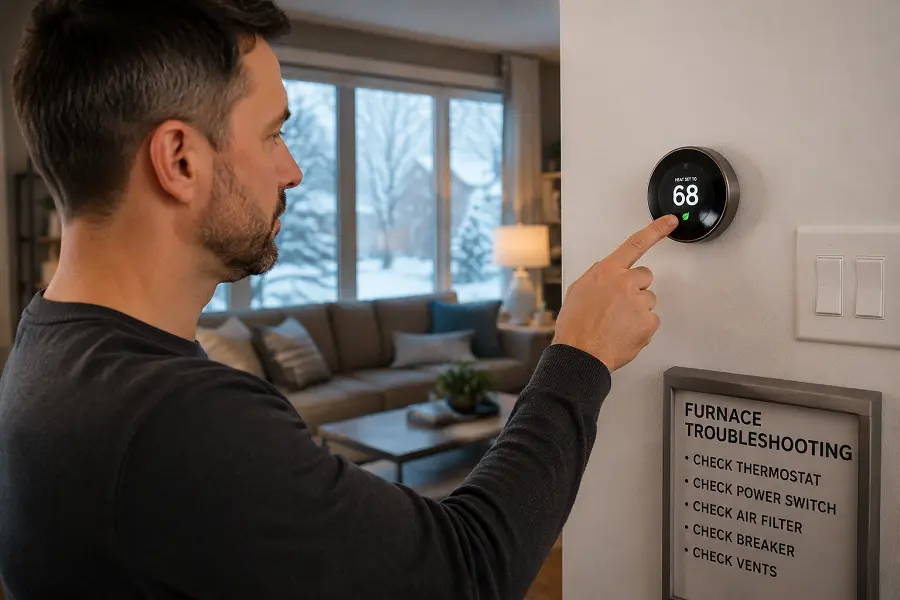
Seasonal Prep: When to Schedule and What to Check
Strategic timing saves money and drama.
- Autumn (September–October): Book a professional tune-up, change filters, test CO detectors, check the thermostat.
- Winter (November–February): Replace filters, ensure vent access after snowstorms, monitor for odd noises or rapid cycling.
- Spring (March–April): Schedule a post-season check to catch hidden issues before summer shutdown.
Homeowners who follow this rhythm typically report fewer no-heat emergencies and lower year-round energy costs.
Professional Inspections: Frequency and Peace of Mind
For optimal performance and warranty coverage, book a certified inspection at least once a year.
Inspections catch:
- Early signs of motor or ignition problems before they become breakdowns
- Leaks, worn belts, and sensor errors that spike your monthly bills by up to 20%
- Safety hazards, including carbon monoxide risks and aging heat exchangers
The smartest homeowners treat professional checks like annual dental visits—essential, not optional.
BobbyAir Support: Local, Ongoing Furnace Care
BobbyAir goes beyond repairs with:
- Affordable maintenance plans designed for GTA homes
- Seasonal service reminders sent right to your phone
- Real 24/7 support, from North York to Oakville
“An ounce of prevention saves a blizzard’s worth of repairs.” With simple routines and help from experienced pros, Toronto homeowners can expect safer, more affordable, and longer-lasting furnace performance. Investing in regular care is the clearest path to uninterrupted comfort—no matter how wild the weather gets outside.
Building a Resilient Comfort System: When to Repair vs. Replace
A dependable furnace is the heart of home comfort in the GTA—especially when winter hits hard. The big question: Should you repair or replace your existing system?
The Key Factors: When to Repair, When to Replace
Several elements tip the scales one way or the other—think of this as your homeowner playbook:
- Furnace age: If your system is over 15 years old, it’s nearing the average lifespan, and repairs may be less economical.
- Repair history: Needing major repairs more than twice in the past two years? Replacement often saves more in the long run.
- Energy efficiency: Modern high-efficiency furnaces can cut energy use by up to 30% compared to models from the early 2000s.
- Part availability: Older or discontinued models mean longer waits, higher costs, and unpredictable downtime.
Picture this: Your furnace is making noises in the middle of a -20°C Toronto night—do you want a patch job or total peace of mind?
The Local Advantage: Savings, Incentives, and Upgrades
Smart homeowners in North York, Oakville, and across the GTA are cashing in on:
- Ontario energy rebates worth up to $1,000 for high-efficiency upgrades.
- Lower monthly gas or hydro bills thanks to AFUE ratings of 95% or higher.
- Eco-friendly systems that integrate with smart thermostats for remote control—perfect for busy families and tech-forward households.
Swapping out an old furnace can pay for itself through utility savings, fewer breakdowns, and added resale value to your home.
Professional Guidance: Make the Right Call with BobbyAir
Unsure what’s best? Here’s how BobbyAir can help:
- On-site assessments—our techs provide honest diagnostics, transparent quotes, and walk you through every option.
- Fast emergency service if your heating fails—our team is on call 24/7 throughout the GTA.
- Warranty-backed installations for all new systems, and clear advice on repair vs. upgrade for your exact needs.
“We treat every home and business in the GTA as if it’s our own—no shortcuts, no guesswork, just reliable comfort.”
Ready to put comfort first? Book a professional furnace assessment or emergency repair today—your next warm, worry-free winter is one step away.
When it comes to furnace decisions, balancing age, repair costs, and efficiency gains ensures your comfort—while BobbyAir’s expertise delivers the long-term peace of mind Toronto homeowners expect.
Conclusion
When the cold hits Toronto, a reliable furnace isn’t just a comfort—it’s essential. By taking quick, smart action, you protect your family, stretch your budget, and gain true peace of mind all winter long.
Keep your system strong and your next heating emergency at bay with habits that work in real homes—whether you’re in North York, Oakville, or anywhere in the GTA.
—
Key Takeaways for Homeowners:
- Prioritize basic troubleshooting at the first hint of trouble—check thermostat settings, swap filters, confirm power and gas before calling for help.
- Regular maintenance pays off—replace filters often, inspect vents quarterly, and listen for new noises to catch problems early.
- Know your limits: If you spot gas smells, repeated shutdowns, or unusual sounds, call a certified HVAC pro—your safety and warranty depend on it.
- Timing matters: Book annual professional inspections in the fall and use reminders to stay ahead of seasonal tune-ups.
- Stay informed about upgrades—consider high-efficiency replacements if your system is 15+ years old or repairs are piling up.
—
Here’s what you can do now:
- Perform a quick furnace check using the steps you’ve learned—catch easy fixes before they become emergencies.
- Schedule a pro inspection if anything seems off, or if your system hasn’t been serviced in the past year.
- Reach out to BobbyAir’s local team for 24/7 support, honest advice, and warranty-backed care when you need it most.
—
A well-maintained furnace means warm nights, lower bills, and peace of mind all season—because in Toronto, home comfort is never optional.
Trust your instincts, act fast, and remember: your warmth and safety always come first. When it matters most, BobbyAir is standing by to help you stay comfortable, efficient, and worry-free—no matter how wild the winter gets outside.
FAQ
What is the first step in Furnace Troubleshooting?
Start by checking thermostat settings, furnace power, circuit breakers, and air filters. These simple checks solve many common furnace not working issues.
Why is my furnace running but not producing heat?
A dirty air filter, thermostat malfunction, ignition problem, or airflow restriction can prevent proper heating. Professional furnace service may be needed if basic troubleshooting doesn’t help.
How often should furnace filters be replaced?
Most 1-inch filters should be replaced every 1–3 months, while thicker filters may last 6–12 months depending on usage and indoor air quality.
When should I call for emergency furnace repair?
Call immediately if you smell gas, notice burning odors, hear loud grinding noises, experience electrical issues, or suspect a carbon monoxide problem.
How long does a furnace typically last?
Most furnaces last between 15 and 20 years with proper furnace maintenance and annual professional inspections.
Is repairing or replacing a furnace more cost-effective?
If repair costs exceed 50% of replacement costs or your system is over 15 years old, furnace replacement often provides better long-term value and energy savings.
Can furnace maintenance improve energy efficiency?
Yes. Regular furnace maintenance, filter changes, and annual tune-ups can improve furnace efficiency by up to 15% while reducing breakdown risks.
What causes frequent furnace cycling?
Dirty filters, thermostat issues, airflow restrictions, or faulty sensors commonly cause short cycling and should be addressed quickly to prevent further damage.