
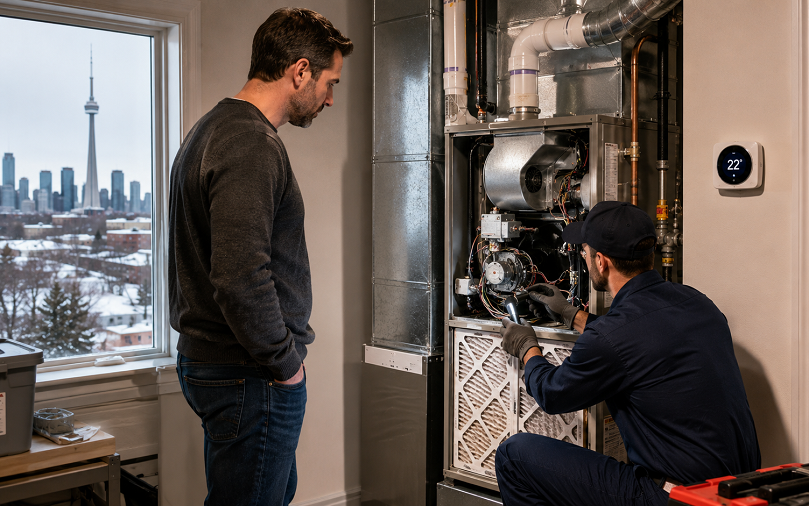
Common Furnace Problems can happen without warning, especially during Toronto’s coldest winter months. This Furnace Troubleshooting Guide explains the most frequent furnace issues, simple homeowner checks, professional repair advice, and preventive maintenance tips to help keep your heating system operating safely and efficiently throughout 2026.
- Change air filters regularly—a clogged filter is the #1 cause of no-heat calls and short cycling in Toronto homes, so replace every 1–3 months for optimal performance.
- Check thermostat settings and power first—over 60% of dead furnace calls are solved by setting the thermostat to “Heat,” raising the temperature, or resetting the breaker.
- Unblock vents and keep airflow clear—closed or obstructed vents often lead to uneven heating, increased energy costs, and avoidable system shutdowns.
- Address strange noises and odors immediately—banging, screeching, or burning smells signal deeper issues; act fast and call a pro if you detect gas or carbon monoxide alarms.
- Perform quick DIY troubleshooting before calling for help—check filters, breakers, and furnace panels, but leave anything involving gas, wiring, or error codes to experienced technicians.
- Schedule annual professional furnace maintenance—yearly tune-ups cut heating emergencies by up to 25% and can add 3–5 years to your system’s lifespan.
- Upgrade or replace older furnaces for efficiency—if your furnace is 15–20+ years old or needs repairs costing over one-third the price of a new unit, replacement can cut bills by 20–30% and improve reliability.
- Embrace smart technology and local support—digital thermostats and in-app diagnostics make troubleshooting easier, but a trusted GTA HVAC partner ensures safety, fast repairs, and peace of mind.
Take these smart steps now to prevent winter breakdowns—and read the complete guide for expert-backed troubleshooting and maintenance strategies that keep your home comfortable, safe, and energy-efficient all season long.
Introduction
You step inside, expecting a wave of warmth—and instead, you’re met with a blast of chilly air. In the GTA, furnace glitches never wait for a convenient moment, often striking when the temperature drops — and your peace of mind is on the line.
Last winter, over 60% of emergency calls in Toronto were due to issues that could have been fixed with just a little troubleshooting. A simple check or filter swap is often all it takes to turn crisis into comfort—and save you from a midnight repair bill.
Every homeowner and property manager knows the stakes: a furnace on the fritz means lost sleep, rising energy costs, and the stress of waiting (and waiting) for help. Especially during a surprise cold snap, having even a basic understanding of your system pays off fast.
That’s why knowing the most common furnace problems, how to spot them, and the smartest fix—DIY or professional—means:
- More reliable heat when you need it most
- Healthier indoor air for your family
- Lower utility bills and fewer unwelcome surprises
But furnaces in Toronto aren’t all the same—gas, electric, or oil—each comes with unique quirks. Newer models bring smart tech into the mix, changing the rules for troubleshooting and maintenance in 2025 and beyond.
This guide arms you with the essentials:
- Which problems pop up most often (and why)
- Step-by-step troubleshooting proven to solve over half of no-heat calls right at home
- When to make the call for expert help—and how a true pro brings peace of mind, fast
- The newest tips for keeping your system energy-efficient and worry-free all winter
Picture yourself fixing a cold house in minutes, instead of waiting in line for emergency service. Whether you’re caring for a busy household or managing a property, that’s the confidence and control you deserve.
Ready to protect your home and your comfort? Let’s get started with the basics every GTA furnace owner should know.
Understanding Furnace Basics and Your Home Comfort
Winters in the Greater Toronto Area aren’t just cold—they’re unpredictable and intense. A reliable furnace is essential for keeping your home warm, healthy, and efficient when you need it most.
For most GTA families and businesses, the right furnace provides three non-negotiables:
- Consistent warmth even on the coldest days
- Safe, clean indoor air
- Energy efficiency that keeps utility bills in check
“Picture this: you step in from below-freezing wind, and the radiant heat from your furnace makes your house a true escape from winter.” That’s the comfort Torontonians expect—and why over 98% of local homes depend on some form of central heating, with natural gas furnaces being most common.
Types of Furnaces in Toronto-Area Homes
Most properties use one of three main furnace types:
- Gas furnaces (by far most popular in the GTA): Deliver powerful, efficient heat—ideal for long, cold Canadian winters.
- Electric furnaces: A solid option where gas isn’t available; simpler, but may come with higher energy costs.
- Oil furnaces: Still found in older or rural homes, though less common due to evolving energy trends.
Knowing your furnace type means faster troubleshooting and smarter decisions about upgrades. “When you know your system, you spot issues before they cost you comfort or cash.”
How Modern Furnaces Function: A Quick Breakdown
Every modern furnace blends several key components to deliver that cozy experience:
- Thermostat: Your “command center”—it senses temperature and tells the furnace when to start or stop.
- Ignition system: Sparks the process, whether via electronic ignitor or classic pilot light.
- Heat exchanger: Where the real heat is created and safely transferred to your air.
- Blower motor: Pushes warm air through ductwork and rooms.
- Ventilation and safety controls: Keep combustion gases out of living spaces and shut down the system if unsafe conditions are detected.
A modern, well-maintained furnace delivers up to 97% efficiency with newer ENERGY STAR® models, helping many GTA owners shrink winter heating costs by $300 or more per year.
Why Furnace Performance Shapes Home Health and Bills
How your furnace runs affects more than just the temperature:
- Good airflow and filtration means healthier air for your family—key during peak cold and flu season.
- Efficient operation equals lower hydro and gas bills month after month.
- Poorly maintained systems can spike costs and even put your home at risk of carbon monoxide buildup.
“The difference between a neglected furnace and a tuned-up one can literally be hundreds of dollars a year in the GTA—and peace of mind you can’t put a price on.”
—
A well-understood furnace underpins comfort, safety, and savings for every Toronto household—know your system, and you’ll know comfort all season long.
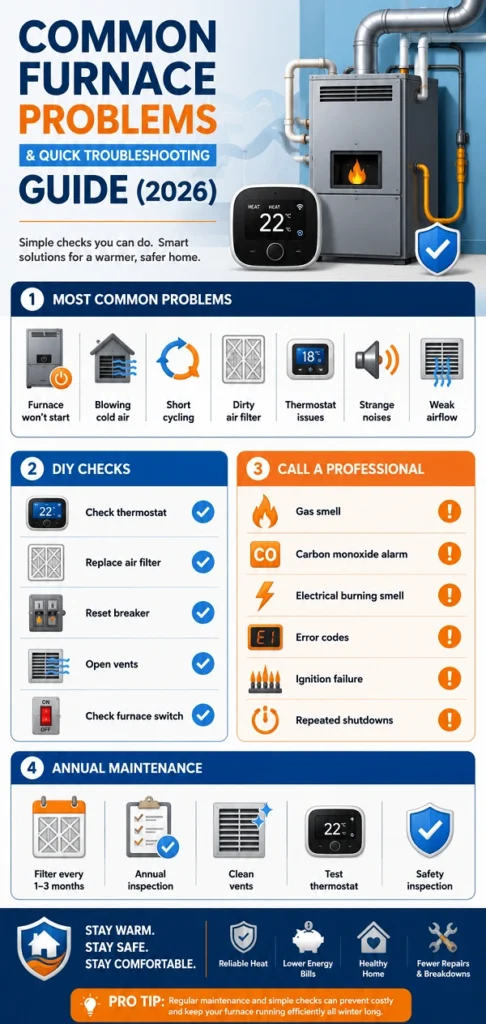
Most Common Furnace Problems in 2025–2026
Common Furnace Problems have evolved as modern heating systems become more energy-efficient and technology-driven. This Furnace Troubleshooting Guide highlights the most frequent furnace issues homeowners experience in 2025–2026, helping you recognize early warning signs, prevent costly repairs, and maintain reliable heating throughout Toronto’s cold winter season.
Identifying Today’s Top Furnace Issues
If your furnace is giving you trouble this winter, you’re not alone—HVAC experts across Toronto say the same four problems keep coming up in 2025–2026.
Picture this: It’s -17°C outside, and you realize the heat won’t come on. You’re facing one of the most common calls we get, and fast action matters.
Here’s what homeowners and property managers encounter most:
- Furnace not turning on: The system is completely unresponsive—no fan, no flame, and silence from the vents.
- Blowing cold air or no heat: The furnace is running, but the air feels cold, leaving your living room chilly even with all the settings cranked up.
- Short cycling: The furnace switches on and off every couple of minutes, never heating the house evenly.
- Unusual noises or odors: Think banging, screeching, or musty smells—these signs signal something deeper could be wrong.
Current data from GTA service calls shows a continued rise in airflow blockages and ignition failures as the main culprits behind mid-winter no-heat emergencies.
Regular maintenance and prompt troubleshooting solve over 60% of common furnace issues—meaning a little attention now prevents a lot of frustration later.
“Most heating emergencies can be avoided with quick filter changes, clear vents, and early attention to error codes.”
—
Root Causes: Why Furnaces Malfunction
Diving deeper, most Toronto-area furnace breakdowns trace back to a few familiar sources:
- Dirty or clogged air filters—still the #1 culprit behind no-heat and short cycling.
- Thermostat faults or wiring issues—misread temperatures, blank screens, or wiring problems confuse your system.
- Ignitor or flame sensor failures—especially in furnaces over 10 years old; modern units trigger safety shutdowns if these parts fail.
- Power supply interruptions or control board failures—tripped breakers, blown low-voltage fuses, or control board errors leave the unit totally silent.
- Ageing components and lack of preventive care—Older furnaces in Toronto’s climate face extra strain from freeze-thaw stress, leading to more frequent repairs.
Local trends show older homes and legacy gas furnaces are more susceptible to repeat breakdowns, especially in harsh winters.
If you hear strange noises, fight persistent cold rooms, or reset your thermostat more than once a week, you’re not alone—and fast troubleshooting now means less downtime later.
“Reliable heat starts with clean filters and prompt fixes—you know your home, so trust your instincts and don’t ignore those first warning signs.”
A few quick checks—like replacing air filters or checking for open vents—can keep your winter comfortable and safe. If your problem returns or you spot error codes, an HVAC pro can save time, money, and the stress of a mid-winter shutdown.
Homeowner’s Step-by-Step Furnace Troubleshooting Guide
Every homeowner should understand Common Furnace Problems before assuming the worst. This Furnace Troubleshooting Guide walks you through the safest first steps to identify simple issues such as thermostat settings, dirty filters, power interruptions, or blocked airflow before scheduling professional HVAC service.
What To Check When Your Furnace Won’t Start
Picture this: It’s January in Toronto, your furnace is silent, and your phone is ready to call for emergency help.
Before dialing, try these fast, safe troubleshooting steps that solve most “no heat” calls within minutes.
- Set your thermostat to “Heat” and raise the temperature at least 3–5°F (2–3°C) above room temp.
- If your thermostat screen is blank, check or replace the batteries, then double-check that it’s firmly snapped into its base.
- Make sure the furnace switch (often looks like a light switch near the unit) is ON.
- Check the breaker panel—reset any tripped breaker labeled “furnace” or “heat.”
- Inspect the furnace door/panel—if not latched, the safety switch disables power.
If your furnace has an LED status light, look for flashing error codes and reference your manual. “If the unit remains lifeless after these steps, call an HVAC technician—further diagnosis involves electrical work.”
Quotable tip: “Nine out of ten ‘dead furnace’ calls are solved by a tripped breaker or unlatching the panel.”
—
Diagnosing No-Heat or Cold-Air Issues
If the blower runs but the air is cold, tackle these spots first:
- Ensure all vents and registers are open and unblocked; blocked vents reduce airflow and force the furnace to shut down.
- Switch off the furnace and replace the air filter if it looks dirty—2025 reports still show dirty filters are the #1 cause of no-heat calls.
- For gas furnaces, check that the gas valve by the furnace is ON (handle parallel to pipe).
- For older units, check if the pilot’s burning; for modern systems, listen for repeated clicking or quick shutdown—which usually signals an ignitor or flame sensor issue.
Safety first: If you smell gas or hear a persistent clicking without ignition, leave the home and call for emergency service.
Memorable quote: “Most no-heat issues start at the vents, filters, or a small thermostat misstep.”
—
Tackling Short Cycling and Airflow Problems
If your furnace keeps turning on and off rapidly:
- Change a dirty air filter—restricted airflow is the most common cause of short cycling.
- Open all vents; do not close too many registers to “save energy”—it often causes overheating.
- Check the thermostat’s location; if it’s too close to a vent or in direct sunlight, it will shut things down prematurely.
- Replace thermostat batteries and check wiring if accessible.
- Walk the basement or utility room—look for obvious duct blockages or disconnected runs.
If issues persist beyond filter and vent checks, or you suspect ductwork problems, it’s time for a pro inspection.
Shareable reminder: “Frequent cycling usually warns of a dirty filter or thermostat issue—both easy to fix.”
—
Unusual Noises, Odors, and Safety Alarms
Strange sounds and smells matter:
- Banging or rattling: Check for loose panels or ducts—tighten if safely accessible.
- Screeching/Grinding: Shut down the furnace and call in a pro; this usually signals blower motor trouble.
- Burning or musty odors on startup are normal for a day or two, but persistent electrical or plastic smells mean turn off and call for help.
- Gas smell or CO alarm: Leave the building and call emergency services—safety always comes first.
Visual scenario: Imagine the furnace kicks on and a sharp smell hits—always trust your nose and act fast.
—
Getting familiar with these steps means you’re better prepared for the most common, stressful furnace problems—and can often restore warmth in less than ten minutes. Start with the basics: filter, thermostat, power, and airflow. For anything involving gas, wiring, or strange alarms, call a BobbyAir technician, and you’ll know your home is safe.
When to Call a Professional HVAC Technician
While many Common Furnace Problems can be resolved with basic troubleshooting, certain warning signs require immediate professional attention. This Furnace Troubleshooting Guide explains when DIY maintenance should stop and when licensed HVAC technicians should safely diagnose gas, electrical, ignition, or carbon monoxide concerns.
If your troubleshooting efforts don’t resolve the issue, professional diagnosis is the safest next step. BobbyAir’s furnace repair services provide expert inspections, fast repairs, and reliable heating solutions throughout the GTA. Whether you’re dealing with ignition failures, airflow problems, thermostat issues, or unexpected breakdowns, certified technicians can restore your heating system safely and efficiently.
Knowing Your Safety Threshold
Sometimes the best troubleshooting step is knowing when to call in an expert—furnace problems can quickly cross from DIY territory to needing professional help.
Watch for these automatic “stop signs”:
- Persistent error codes or the furnace still delivers no heat after you’ve checked the thermostat, breaker, filter, and vents
- Signs of electrical, ignitor, blower, or control board issues—like humming, rapid cycling, or the blower refusing to start
- Any smell of gas, a flashing carbon monoxide (CO) alarm, or sparking/wiring problems
- Furnace is 15–20+ years old with repeating issues—repair costs may outpace savings
“If you smell gas or your CO alarm sounds, evacuate and call emergency services—no exceptions.”
Homeowners in Toronto report that nearly one in three emergency HVAC calls involve suspected gas leaks or ignition issues—never attempt to diagnose these yourself.
What to Expect from a Professional Visit
A certified BobbyAir technician follows a clear, thorough approach—perfect for busy families or property managers who need reliable answers fast.
Here’s what’s typical:
| Diagnostic Service | What the Technician Does | Typical Time | Typical Cost (2026) |
|---|---|---|---|
| Visual & System Diagnostics | * Read furnace status lights and error codes * Trace electrical wiring and safety circuits * Test thermostat communication * Measure voltage, airflow, and system performance using professional diagnostic tools | 30–60 minutes | $90–$180 |
| Ignitor Replacement | Replace failed hot surface ignitor or spark ignitor, verify ignition sequence, and perform complete safety testing. | 60–90 minutes | $150–$350 |
| Flame Sensor Service | Clean or replace the flame sensor, verify flame signal, and restore reliable burner operation. | 30–60 minutes | $75–$250 |
| Thermostat or Control Board Repair | Diagnose communication issues, wiring faults, faulty thermostats, or damaged control boards before repair or replacement. | 1–2 hours | $100–$600 |
| Blower Motor or Capacitor Repair | Inspect blower assembly, replace failed capacitor or blower motor, test airflow, and verify heating performance. | 2–3 hours | $250–$700 |
Transparency matters: BobbyAir always explains what’s found, reviews costs up front, and backs repairs with a clear warranty.
Picture this: A technician arrives in a branded van, walks you through each test, and gets your heat back—explaining options at every step.
Fast, Reliable Service for GTA Homeowners
- 24/7 emergency response is the local standard—expect same-day solutions for most issues
- Real testimonials prove: “The BobbyAir crew had our furnace heating in under two hours with a new ignitor—total peace of mind.”
Memorable takeaway: When basic fixes don’t get your furnace running, trust a certified technician—qualified help protects your family, your investment, and your comfort all winter.
If in doubt, always play it safe and reach out—your comfort and safety come first, and getting help early often saves you time and money.
Proactive Maintenance and Preventive Care
Preventive maintenance is one of the most effective ways to reduce Common Furnace Problems and improve heating efficiency. Following a seasonal Furnace Troubleshooting Guide helps homeowners catch small issues early, lower repair costs, and extend the lifespan of their furnace.
Keeping your heating system maintained not only improves efficiency but also supports indoor safety. Homeowners can review professional furnace maintenance recommendations from U.S. Department of Energy and learn about high-efficiency heating systems certified through ENERGY STAR® before planning repairs or upgrades.
DIY Maintenance Essentials for Homeowners
Keeping your furnace running efficiently in the GTA doesn’t have to be complicated or time-consuming.
A few simple monthly and seasonal habits can help you avoid costly repairs and keep your home comfortable during peak winter.
Picture this: every month, you glance at your thermostat, check your vents, and swap out a dusty filter in just a few minutes—saving yourself hundreds in emergency calls over the years.
Here’s what should stay on your calendar:
- Change your air filter regularly—every 1–3 months, depending on filter type and family size (homes with pets or allergies benefit from monthly changes).
- Keep all supply and return vents clear of furniture, carpets, or boxes—obstructed airflow can cause uneven heating and strain your system.
- Check thermostat batteries (if applicable) every season—low batteries or bad contacts are a top cause of furnace “no-heat” calls.
- Do a quick system inspection: look for dust build-up, water leaks by the unit, or anything blocking your maintenance area.
A filter clogged with dust is the #1 cause of no-heat service calls in Toronto homes each winter.
Annual Professional Furnace Maintenance
Even with diligent DIY, an annual furnace tune-up by a licensed HVAC pro is essential.
A true professional maintenance visit delivers:
- Burner and heat exchanger cleaning for maximum performance and safer operation.
- Comprehensive safety inspection—key for preventing gas leaks and carbon monoxide risks.
- Electrical and wiring checks to catch issues before they become breakdowns.
- System optimization for peak efficiency and even heating throughout your home.
Check out our Furnace Maintenance Tips for Homeowners 2026 for easy-to-follow seasonal checklists and expert homeowner advice.
Most GTA homeowners see 10–25% fewer heating emergencies—and extend furnace life by 3–5 years—just by sticking to regular professional tune-ups.
Bringing It All Together
By combining simple monthly checks with a yearly professional inspection, you’ll enjoy lower energy bills, safer operation, and greater peace of mind all winter.
“Spend 5 minutes a month on your furnace, and avoid the midnight emergency call nobody wants.”
Your comfort—and wallet—depend on it.
Furnace Lifespan, Repair vs. Replacement, and Cost Factors
Understanding how long your heating system should last helps homeowners make smarter repair and replacement decisions. Learning how Common Furnace Problems develop over time through this Furnace Troubleshooting Guide allows you to plan maintenance, avoid emergency breakdowns, and maximize your furnace investment.
How Long Should a Home Furnace Last?
A typical gas furnace in the Greater Toronto Area lasts 15–20 years, while electric furnaces often reach 20–25 years—and oil units sit somewhere in-between.
Furnace lifespan is shaped by several critical factors:
- Brand/build quality: Higher-end brands, when installed properly, usually last longer and need fewer repairs.
- Correct installation: Poor or rushed installs often cause premature breakdowns, wasted energy, and recurring issues.
- Usage habits/maintenance: Furnaces that get regular filter changes, timely annual inspections, and run without frequent “off/on” cycling tend to outlast neglected units.
- Local climate/utility reliability: Toronto’s cold winters and utility service consistency play a big role; more extreme or fluctuating conditions can shorten a furnace’s effective life.
“Many homeowners are surprised how much preventive care can add up to a decade of extra comfort.”
Curious where your unit stands? Get detailed info on lifespans and warning signs at our “How Long Should a Home Furnace Last?” resource.
—
Repair or Replace? Making the Right Decision
When is it time to consider replacing instead of repairing?
Watch for these warning signs:
- Frequent major repairs (multiple per season or over $500/year)
- Inconsistent heating, growing hot/cold spots, or regular reset cycles
- Units older than 15–20 years, especially after repeated part failures
Choosing repair vs. replacement often comes down to a quick cost-benefit analysis:
- If the repair cost is more than one-third the price of a new system, replacement is usually the smarter bet.
- New high-efficiency furnaces can drop your GTA heating bills by 20–30% and often qualify for local rebates or incentives—up to $1,000+ for specific energy-saving models.
- As of 2026, the average new installation in the GTA ranges from $3,500–$6,000, depending on the system.
- “Choosing an energy-efficient upgrade can pay for itself in utility savings and peace of mind.”
Compare your symptoms with our “Signs Your Furnace Needs Repair or Replacement” guide for step-by-step help deciding.
—
If your furnace keeps breaking down, pushes up bills, or leaves rooms cold, it’s worth reviewing replacement options—planned upgrades mean lower long-term costs and extra comfort all winter. Knowing exactly when to repair or replace is the key to stress-free home comfort in the GTA.
Frequently Overlooked Issues and Modern System Considerations
Evolving HVAC Technology: Troubleshooting in 2025–2026
Furnaces have come a long way in Toronto-area homes, with newer models now featuring smart thermostats, electronic ignition systems, and advanced safety controls.
Today’s systems use digital diagnostics, sensors, and app-based monitoring, which means troubleshooting looks very different than it did a decade ago.
Instead of ignition pilots or manual controls, many modern furnaces require you to:
- Check your smart thermostat’s Wi-Fi connection and app notifications—an offline or misconfigured device can cause missed heating cycles.
- Reference digital error codes or flashing LEDs on the furnace panel to pinpoint faults like ignition lockout or sensor failure.
- Reset system faults using brand-specific smartphone apps or panel buttons, a feature now common in 2025–2026 units.
If you’re wondering, “Will my AC run if the furnace is down?”—the answer depends on how your system is integrated. Most homes in the GTA have shared blowers, so a furnace issue could impact both heating and cooling. For details, see our AC–Furnace Integration FAQ.
Picture this: A North York family sees a furnace error code flash on their app, then resolves a no-heat issue in minutes with a quick guide—this is the new normal.
“Troubleshooting a furnace now often starts with your phone, not a toolbox.”
“Many top furnace problems in the GTA involve smart sensors or in-app alerts, not just noisy ducts or dusty filters.”
—
Why Local, Reliable HVAC Support Matters More Than Ever
Smart heating technology is fantastic—but you need a trusted HVAC partner ready for today’s fast-moving issues.
A responsive, community-based crew brings:
- 24/7 emergency response and genuine local testimonials
- Transparent pricing and clear updates from uniformed professionals—not phone trees
- Ongoing support that extends beyond just repairs, including proactive maintenance and best system setup for your home
Busy families and property owners choose BobbyAir not only for speed, but because real support means knowing who’s at your door.
By building a professional relationship, you get:
- Fast solutions to both new and old system issues
- Regular tune-ups that extend furnace and AC lifespan, saving $1,000s over a decade
- Peace of mind that’s hard to put a price on—especially in GTA winters
“Don’t wait for a breakdown—your comfort, safety, and savings start with one friendly call.”
In today’s world of smart equipment and app alerts, having a real, reliable HVAC partner standing by is the key to solving problems before they interrupt your week.
Conclusion
Ensuring your furnace is running safely and efficiently isn’t just about comfort—it’s about protecting your home, reducing costs, and bringing peace of mind to every GTA winter. By taking a proactive, informed approach, you can avoid unexpected breakdowns and enjoy healthy, cozy living all season long.
You’re empowered to keep your system in top shape and recognize those critical moments when it’s time to call in trusted professionals. Simple habits now can save you stress and money later.
—
Take these action-ready steps to boost your comfort and safety:
- Replace your furnace air filter every 1–3 months—clean airflow solves most no-heat emergencies
- Check that all vents and registers are clear of blockages to ensure even, efficient heating
- Test or replace thermostat batteries and confirm all settings before the cold hits
- Review your furnace area for obvious issues like open access panels or water leaks
- If you spot persistent problems or warning signs, schedule a yearly professional tune-up with a certified GTA HVAC technician
- Never ignore unusual noises, odors, or error codes—addressing them quickly stops small issues from becoming big ones
—
Here’s how you can take charge right now:
- Do a quick filter and vent check today—it’s the simplest way to prevent a midnight furnace emergency.
- Mark your calendar for seasonal maintenance—DIY and pro checkups both matter.
- Save BobbyAir’s emergency number and bookmark this guide for fast troubleshooting whenever you need it.
—
Home comfort is never a gamble when you stay proactive and partner with experts you trust. Choose peace of mind, not panic—because in the GTA, a well-cared-for furnace isn’t just an upgrade, it’s a promise of warmth when it matters most.
—
“Take action today, and let your furnace work for you—not the other way around.”
FAQs
1. What are the most common furnace problems?
The most common furnace problems include dirty air filters, thermostat malfunctions, ignition failures, blower motor issues, clogged vents, short cycling, and furnaces that won’t produce heat. Most issues can be identified using a basic Furnace Troubleshooting Guide before professional repairs are needed.
2. Why won’t my furnace start?
A furnace may not start because of a tripped breaker, incorrect thermostat settings, a dirty filter, an open furnace door, ignition failure, or electrical issues. Following a structured Furnace Troubleshooting Guide helps identify these problems safely.
3. Can I troubleshoot my furnace myself?
Yes. Homeowners can safely check thermostat settings, replace dirty filters, inspect circuit breakers, and ensure vents remain open. However, gas leaks, electrical faults, carbon monoxide alarms, or damaged components require licensed HVAC professionals.
4. How often should a furnace be serviced?
Most HVAC professionals recommend annual furnace maintenance before winter begins. Routine servicing reduces Common Furnace Problems, improves energy efficiency, and extends equipment lifespan.