
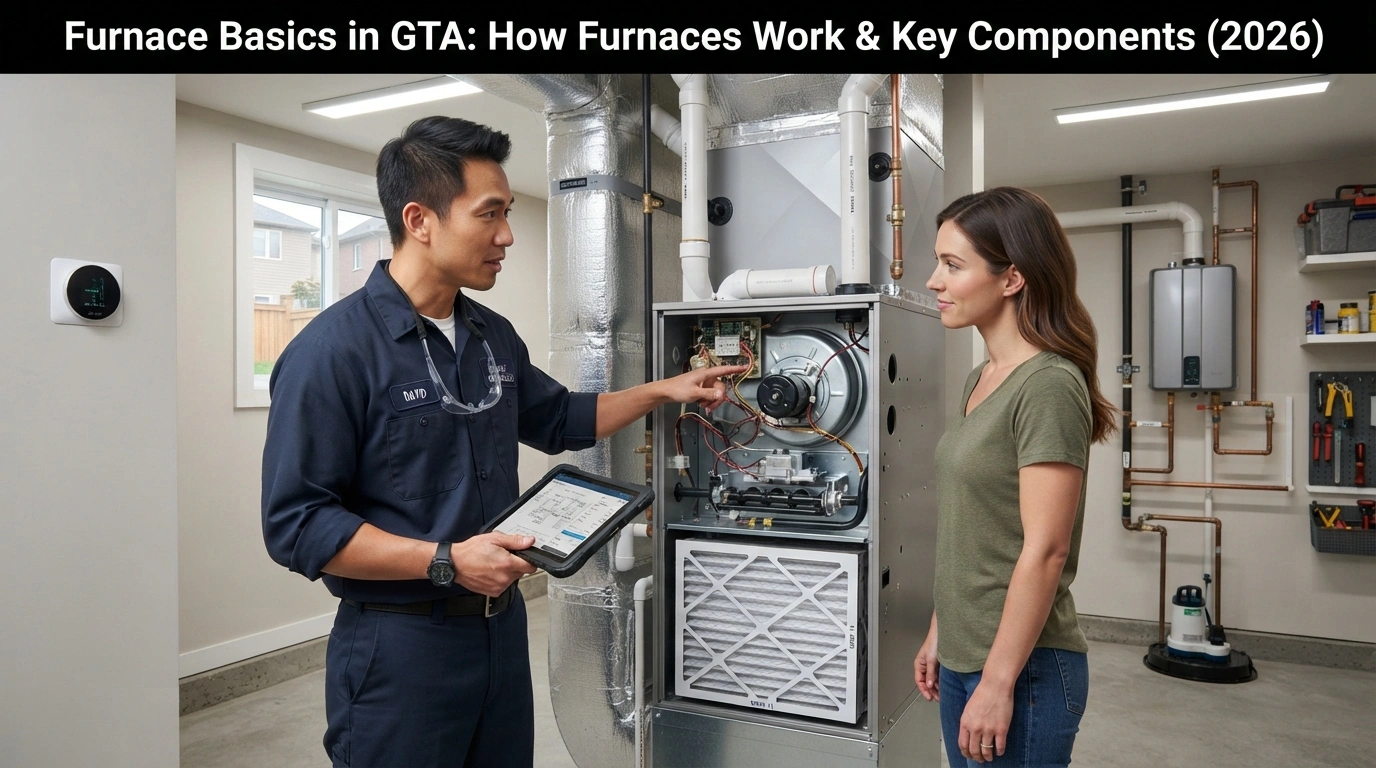
Furnace Basics in GTA are essential for every homeowner who wants to understand how their heating system operates, improve energy efficiency, and avoid costly repairs. Whether you have a gas or electric furnace, knowing how the major components work together can help you recognize early warning signs, schedule timely maintenance, and keep your home comfortable throughout the heating season. This complete guide explains furnace operation, key parts, safety considerations, and maintenance best practices for homes across the Greater Toronto Area.
- Furnace basics in GTA start with the thermostat: Your thermostat acts as the control center, signaling the furnace to heat whenever indoor temperatures drop below your set comfort level.
- Every furnace relies on critical safety features: Core components like the control board, flame sensor, and high-limit switch work together to guarantee safe operation and prevent hazards such as gas leaks or overheating.
- Modern GTA homes favor gas furnaces: Gas units provide efficient, fast, and affordable heat, with installations typically ranging from $3,000–$6,500 and AFUE ratings up to 98%—translating to real fuel savings each winter.
- High-efficiency components deliver savings: Prioritize variable-speed blowers, two-stage gas valves, and smart thermostats to boost comfort and cut annual heating costs by $300–$900.
- Consistent maintenance is a must: Annual professional tune-ups, regular filter changes, and seasonal checks not only extend furnace life to 15–20 years but also protect against unexpected breakdowns and carbon monoxide risks.
- Clear warning signs mean prompt action: Address noises, uneven heating, sudden bill increases, or cycling issues early to prevent bigger system failures and costly repairs.
- Upgrading an aging furnace pays off quickly: Systems 12–15+ years old are less efficient; new models deliver up to 25% in energy savings and greater peace of mind, especially as Toronto winters intensify.
- Professional installation and local expertise matter: 70% of furnace issues stem from improper sizing or setup—trust certified GTA experts like BobbyAir to maximize comfort, efficiency, and safety in your home.
Take a few minutes to review the full guide and unlock expert strategies that will keep every room in your home cozy, efficient, and reliable all winter long.
Introduction
Imagine coming home after a long Toronto workday, bracing against a biting wind chill, only to find your living room just as frosty as the street outside.
If you’ve ever worried about your heating system failing on the coldest night—or wondered why some corners of your home seem warmer than others—you’re not alone.
In fact, over 80% of GTA households depend on a furnace to beat our notorious winters, making it the true backbone of home comfort in neighborhoods from North York to Oakville.
Yet, for most homeowners, the inner workings of a furnace remain a mystery, despite playing such a critical role in daily life.
Understanding the basic furnace cycle, main components, and types of systems gives you powerful peace of mind:
- Spot early warning signs before they become emergencies
- Break down heating decisions like when to repair, maintain, or upgrade
- Boost energy efficiency and lower home heating bills through smart upkeep
Whether you’re facing a sudden “no heat” alert, planning a new installation, or simply want to keep your family warm and safe, a few key insights can make all the difference.
We’ll walk you through the essentials—how furnaces really work, what key parts to watch, and the options best suited for Toronto-area homes—all with clear explanations, zero jargon, and tips proven by local expertise.
Ready to see exactly how your furnace keeps you comfortable (and what to do if it doesn’t)?
Step inside, and discover why knowing furnace basics in GTA is the smartest way to protect your comfort, budget, and peace of mind this season.
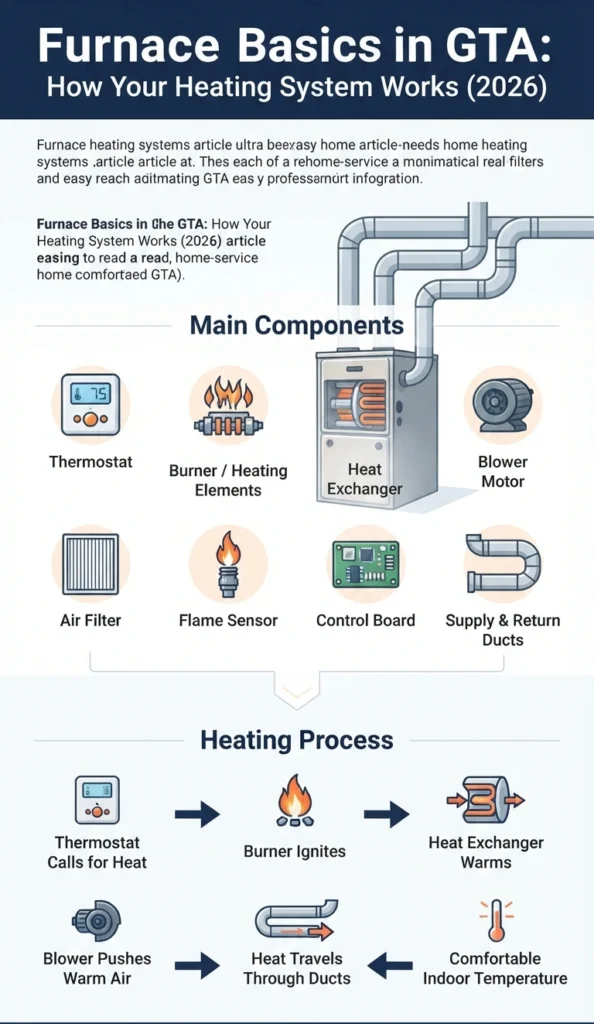
Understanding How Furnaces Work
Home furnaces are the beating heart of comfort in Toronto-area homes, especially when winter temperatures hit -15°C or below.
Cold air triggers the thermostat, which acts as the furnace’s command center, telling the system it’s time to turn on.
What does a furnace really do? Simply put, it takes cool indoor air, heats it up using fuel or electricity, and circulates warm air back into every room—repeating this cycle until your set temperature is reached.
In the GTA, over 80% of homes rely on gas furnaces for reliable heat, efficient operation, and fast response during deep freezes.
“A well-tuned furnace means peace of mind—no cold rooms, no safety worries, just even, reliable heat all season long.”
—
The Heat Cycle in Detail
Every furnace heating cycle follows a predictable, safety-first sequence you can actually observe:
- Thermostat calls for heat
The thermostat drops below your set point and signals the furnace.
- Draft inducer fan starts and safety checks run
Homeowners may hear a faint hum as the draft inducer preps the system and sensors perform checks.
- Gas ignites and burners fire up
- The gas valve clicks open.
- An electronic igniter sparks the burners (usually with a gentle woosh or snap).
- The flame sensor verifies the burners are lit; if not, it shuts off gas flow for safety.
- Heat exchanger gets hot
Flames heat sealed metal chambers—no combustion gases ever mix with your indoor air.
- Blower kicks in to move air
- The blower fan draws air from your home through return ducts and a filter.
- Air passes outside the heat exchanger, absorbs heat, and is pushed into the supply ducts.
- Warm air fills every room
Heated air rolls out of supply vents; you’ll notice rooms warming in minutes.
- Cool air returns and repeats
Cooled air flows back to the furnace, keeping the cycle going until the thermostat is satisfied.
- Exhaust gases safely vent outside
Combustion byproducts exit through the flue—protecting your family from harmful gases like carbon monoxide.
—
Picture this: You come home on a snowy Toronto evening, hit the thermostat, and within moments you hear the gentle hum and rush of warm air—the sound and feel of comfort engineered for Canadian winters.
A safe, efficient furnace isn’t just about heat; it’s about protection, reliability, and keeping every corner of your home comfortable no matter what. Getting familiar with these basics helps you spot issues early and know when your system runs at its best.
Key Furnace Components and Their Roles
Understanding the critical parts of your furnace system helps you spot problems early and keep your home comfortable—especially during a Toronto winter.
A modern furnace is a team player: every component works together to deliver reliable, energy-efficient heat to every room.
Picture this: on a snowy night in North York, your thermostat quietly triggers a chain reaction inside the furnace that you hardly notice—unless something goes wrong.
—
Control & Safety Systems
At the heart of safety and precision are the thermostat and the control board.
- Thermostat: Acts as your command center, sensing room temperature and sending a “heat now” signal when your space drops below your set comfort point.
- Control board: Think of it as the furnace’s brain—it interprets thermostat signals, coordinates ignition, manages gas flow, and activates safety features.
- Gas valve: Controls the flow of natural gas or propane; shuts instantly if unsafe conditions are detected.
- Flame sensor: Confirms a burner flame is present; cuts gas supply for safety if not.
- High-limit switch: Monitors internal temperatures, turning off burners if overheating occurs.
Common issues:
If your thermostat batteries die or your flame sensor malfunctions, you may experience no heat or sudden shutdowns. As one BobbyAir client recalled, “My house went cold until a quick sensor replacement had the furnace humming again.”
—
Combustion & Heat-Transfer Components
Heat is produced and transferred safely by a series of rugged, expertly engineered parts.
- Burners: Mix gas with air and produce the flames that heat the system.
- Ignition system: Either a modern hot surface igniter or a classic pilot light, it sparks safe combustion inside the combustion chamber.
- Draft inducer fan: Pulls fresh air for burning and ensures byproducts are vented outside, boosting safety and efficiency.
- Heat exchanger: The “shielded highway” where hot combustion gases warm but never mix with your breathing air—crucial for carbon monoxide protection.
- Flue/vent: Channels combustion gases outdoors, keeping your indoor air safe.
Toronto trend:
High-efficiency furnaces now use secondary heat exchangers, achieving 95%+ AFUE and saving most GTA families hundreds per year on fuel costs.
—
Air-Moving & Ductwork System
Delivering that warmth efficiently takes a coordinated airflow system.
- Blower motor and fan: Circulate air through the heat exchanger and ducts; newer variable-speed or ECM motors are quieter and save energy, automatically adjusting speed for your comfort.
- Air filter: Captures dust and allergens, protecting both the equipment and your air quality.
- Return and supply ducts/registers: Move cool air back to the furnace and deliver warm air throughout your home.
“A clean blower and high-quality filter mean you’ll feel even heat—no cold spots, quieter nights, and lower bills,” says BobbyAir’s lead technician.
—
For GTA homeowners, knowing your furnace’s major parts makes it easier to spot signs of trouble early—like unusual noises, temperature swings, or rising energy costs—and gives you the knowledge to ask smart questions if you ever need a repair. Investing just a few minutes to learn these basics can help you avoid costly breakdowns and keep your home cozy, safe, and energy efficient all season long.
TYPES OF FURNACES: STRATEGIC OVERVIEW FOR GTA HOMEOWNERS
When choosing a furnace for your Toronto-area property, understanding the main categories—gas, electric, and oil/propane—is essential.
Each type offers unique advantages, operating costs, and fits different home or business needs for our local climate.
Gas Furnaces: Toronto’s Reliable Standard
Gas furnaces remain the top choice in Toronto, North York, Oakville, and surrounding areas.
You’ll benefit from:
- Lower operating costs compared to electric units due to Ontario’s affordable natural gas rates
- Powerful, fast heat—ideal for mid-winter temperature drops
- Integration with existing ductwork in most area homes
Key points for homeowners:
- Installation typically ranges from $3,000 to $6,500, depending on features and efficiency levels
- Today’s gas models reach up to 98% AFUE (Annual Fuel Utilization Efficiency), slashing wasted energy and monthly bills
Common scenario: Picture this—on a frigid January night, your thermostat clicks on, and a gas furnace quietly floods your home with steady, even warmth.
Quotable insight: “For most GTA homes, natural gas furnaces deliver the best mix of comfort, economy, and peace of mind.”
Electric Furnaces: Clean, Versatile Alternatives
Electric furnaces use heating coils instead of burners and work with the same duct system as gas units.
They are often chosen for:
- Homes without gas lines (condos, newer builds, or all-electric communities)
- Lower upfront installation costs, but typically higher ongoing utility bills—electric heating is 3–4x the cost of gas per BTU in Ontario
You won’t deal with combustion byproducts, but you may notice:
- Slower heat-up times and less robust output on the coldest days
Quotable tip: “Electric furnaces are a smart solution for properties where clean, safe heat outweighs monthly operating costs.”
Oil & Propane Furnaces: Rural and Specialty Use
Oil and propane models remain common in older homes or outlying/rural GTA areas lacking gas service.
Homeowners considering these options face:
- Frequent tank fill-ups and regular burner maintenance
- Higher emissions and environmental impact compared to natural gas
Look for these if you value energy independence, but be aware of greater upkeep and potential local restrictions.
Trends and Energy Efficiency Factors
High-efficiency furnaces (90%+ AFUE) are dominating the GTA market, helping homeowners cut annual heating bills by $300–$900 on average.
Key upgrades to prioritize:
- Variable-speed blowers
- Two-stage gas valves
- Smart thermostats for precise control and comfort
Ontario’s green initiatives and rising fuel costs make energy-efficient furnaces a future-proof investment.
The bottom line: Choosing the right furnace means balancing upfront investment, ongoing costs, and the features that best match your home’s needs and Toronto’s climate. Understanding your options is the first step toward lasting comfort, efficiency, and reliability that stands up to any GTA winter.
The Importance of Regular Furnace Maintenance
A well-maintained furnace means year-round comfort, lower energy costs, and peace of mind for GTA homeowners—especially during those -20°C Toronto nights.
Neglecting routine service puts your family and property at risk of unexpected breakdowns, poor air quality, or even carbon monoxide leaks.
Three big reasons to keep your furnace maintained:
- Safety: Technicians check for carbon monoxide, gas leaks, and potential fire hazards.
- Reliability: A serviced furnace is far less likely to fail when you need it most.
- Efficiency: Dirty or worn parts can spike energy bills by 10–20% each season.
“An annual inspection could be the difference between a cozy winter and a furnace emergency call at midnight.”
If you’re applying these Furnace Basics in GTA to your own home and want to ensure your heating system operates safely and efficiently, our professional furnace services include inspections, maintenance, repairs, and new installations tailored to your home’s needs. Learn more on our furnace service page to discover how regular professional maintenance can improve performance, extend equipment life, and reduce unexpected breakdowns.
What’s Included in a Professional Maintenance Visit?
A BobbyAir tune-up for GTA homes includes:
- System-wide inspection: burners, heat exchanger, electrical controls, fan, and safety switches
- Deep cleaning: Blower assembly, air filter, and burner area
- Safety checks: Carbon monoxide test, verify flue venting, check for gas leaks
- Performance tune-up: Lubricate moving parts, calibrate thermostat and HVAC controls
Picture this: A certified technician in a BobbyAir uniform, tools ready, checks your heat exchanger for cracks while answering your questions about energy-saving upgrades—this is routine in modern, reliable HVAC care.
—
Seasonal Maintenance Tips for Toronto’s Climate
Stay ahead with this local checklist:
- Replace or clean filters every 1–3 months
- Clear vents and registers of dust or obstructions
- Schedule annual professional service, ideally in late summer or early fall
- Watch for icy buildup on exterior vent pipes in deep winter
“Think of routine furnace service like an annual checkup for your home’s heartbeat.”
—
Common Signs of Component Issues
Don’t ignore these warning signals:
- Unusual banging, rattling, or grinding noises
- Rooms feeling colder or not heating evenly
- Utility bills increasing without explanation
- Furnace cycling on and off too quickly (short cycling)
- Dust around vents or increased allergy symptoms
Blower motors are a common culprit in noisy or weak airflow conditions—learn more about this on our “Furnace Blower Motor” sub-page.
—
Proactive maintenance reduces costly surprises, extends system life, and ensures healthy, efficient comfort for every room in your home. Regular service by trusted experts isn’t just a recommendation—it’s what makes every winter in Toronto manageable and safe.
When to Consider Furnace Upgrades
As a Toronto-area homeowner, knowing when to upgrade your furnace can protect your comfort, lower your bills, and avoid sudden winter emergencies.
If your furnace is 15 years or older, you may already notice:
- Longer run cycles and “cold spots” in different rooms
- Repairs becoming more frequent or expensive—industry averages show costs often spike in the final 2 years of a furnace’s life
- Rising energy bills as efficiency drops below newer models
Picture this: It’s the first deep freeze of January, and your aging furnace struggles to keep up—meanwhile, newer high-efficiency models in Toronto save up to 25% on heating costs each year.
Key Triggers for a Furnace Upgrade
Upgrade discussions often begin when you see:
- Repairs stacking up over two winters
- Your furnace struggling after a large renovation or home addition
- Noise, dust, or uneven heat from outdated equipment
- Concerns about indoor air quality or carbon monoxide from older heat exchangers
- A need to meet Toronto’s stricter energy-efficiency codes or eco-rebates
Homeowner tip: Any furnace older than 12-15 years can be replaced with a system that’s quieter, cleaner, and more reliable.
What’s Involved in Upgrading?
The typical upgrade journey includes:
- Professional in‑home assessment to size and select the right model
- Removal of your old unit and safe handling of connections
- Installation of advanced options—with features like variable-speed blowers and smart thermostats that optimize your comfort and cut energy use
- System testing, filter upgrades, and a warranty walkthrough
- Year-round support with priority maintenance options
“Upgrading your furnace isn’t just about heat—it’s about peace of mind and investing in your family’s future comfort.”
Why It Pays to Consult Experts
Proper sizing, system choice, and installation are key—70% of HVAC issues stem from mistakes during setup or selection.
BobbyAir’s certified team helps you:
- Compare energy savings for different models, including high-efficiency units now standard across the GTA
- Navigate rebates or eco-incentives for your property
- Select options that fit your comfort, budget, and environmental goals
When you’re eyeing more comfort, safety, and efficiency—or tired of repeated repairs—it’s time to plan your upgrade.
Recognizing the signs for a furnace upgrade empowers you to act before trouble strikes, secure year-round warmth, and lock in lower energy costs for years to come.
Furnace FAQ: Foundations Homeowners Need to Know
When your furnace is the heart of Toronto home comfort, basic know-how pays off—especially during those frosty -20°C mornings.
A well-maintained furnace in the GTA typically lasts 15-20 years according to recent industry surveys.
Regular maintenance helps you stretch system life and keep energy bills down, even when temperatures swing wildly between North York and Oakville.
How Can Homeowners Make Furnaces Last Longer?
Picture this: it’s February, your furnace is humming along as the snow piles up—what keeps it reliable?
- Schedule professional maintenance every fall—think inspection, deep cleaning, safety checks, and a full tune-up.
- Change your air filter every 1-3 months (or more often if you have pets or allergies).
- Keep vents and ducts clear from furniture or dust buildup.
- Watch for warning signs: odd noises, irregular cycling, or a spike in your heating bill.
“A few minutes of monthly attention can save you hours of headache—and hundreds of dollars—later,” says BobbyAir’s lead technician.
Furnace Performance & Types: What Matters?
Toronto homeowners often ask: What’s the difference between single-stage, two-stage, and variable-speed furnaces?
- Single-stage: On at full blast or off; simple but less efficient.
- Two-stage: Can run at lower power on mild days for better comfort and savings.
- Variable-speed: Adjusts the blower to match your home’s real-time needs, meaning quieter operation and lower energy use.
About 60% of new GTA installations now opt for multi-stage or variable solutions for maximum comfort and efficiency.
Air Quality, Safety & Filter Facts
Your furnace doesn’t just heat—it impacts indoor air quality.
- Furnaces use an air filter to capture dust and particulates, and a dirty filter strains the system.
- For most GTA homes: Replace filters at least every three months for best performance.
- Professional installation and maintenance matter for safety—carbon monoxide leaks and airflow issues can’t be ignored.
“Every clean filter means cleaner air your family breathes,” is advice worth sharing with any neighbor.
For a quick visual: Imagine a simple diagram—thermostat on the wall, blue arrows showing cool air pulled into a filter, warm air (red arrows) pushed out through ducts, and a sealed flue carrying combustion gases safely outside.
Want deeper answers or a custom diagram? Explore our sub-pages for expert tips you won’t find anywhere else.
Understanding these basics gives you the power to protect your home, boost efficiency, and avoid unexpected furnace trouble all winter long.
Conclusion
Mastering the essentials of how furnaces work isn’t just smart—it’s your ticket to a warmer, safer, and more energy-efficient home across the GTA. Understanding your system gives you the power to act fast, spot issues early, and invest wisely in your family’s comfort.
Whether you’re settling into a chilly Toronto night or planning your next upgrade, every step you take toward furnace know-how brings real rewards: lower bills, dependable performance, and peace of mind—season after season.
—
Put knowledge into action with these proven moves:
- Schedule annual professional maintenance to catch problems early and keep your system running at peak efficiency.
- Change your air filter every 1–3 months—this simple habit keeps air clean and prevents costly breakdowns.
- Stay alert for warning signs: Noises, temperature swings, and rising bills all deserve your attention.
- Consult an expert before a major upgrade—a pro assessment ensures you get the right size, model, and energy savings for your home.
- Explore high-efficiency options like variable-speed blowers and smart thermostats for greater comfort and future-ready efficiency.
—
Ready to take the next step?
- Book your annual furnace checkup—our certified BobbyAir team is available 24/7 for expert care and fast response.
- Review your current heating system: Is it 12+ years old or showing signs of age? Start planning now to avoid winter surprises.
- Ask about upgrade incentives and modern features that fit your space, budget, and sustainability goals.
- Reach out for personalized advice—we’re here to answer your questions and help you get the most from your investment.
—
Your Toronto home deserves warmth that never lets you down. When you know your furnace, you control your comfort—and every upgrade is a step toward lower bills, cleaner air, and a worry-free winter.
“A well-cared-for furnace isn’t just equipment—it’s the heartbeat of your home comfort for years to come.”
FAQs
What are Furnace Basics in GTA?
Furnace Basics in GTA include understanding how a furnace generates heat, the function of its major components, routine maintenance requirements, and common signs that indicate professional service may be needed.
How does a residential furnace work?
A furnace heats air using gas or electricity and distributes warm air throughout the home using a blower motor and ductwork controlled by a thermostat.
How often should a furnace be serviced?
Most HVAC professionals recommend scheduling a professional inspection and maintenance service at least once a year before the heating season begins.
What are the main furnace components?
Key components include the thermostat, burner or heating elements, heat exchanger, blower motor, air filter, control board, flame sensor, inducer motor, and ductwork.
How long does a furnace last?
A well-maintained residential furnace typically lasts between 15 and 20 years, depending on the model, usage, and maintenance history.
Improving furnace efficiency starts with proper maintenance, insulation, and choosing equipment with high energy performance ratings. According to Natural Resources Canada, upgrading to an energy-efficient heating system, replacing filters regularly, sealing air leaks, and using a programmable or smart thermostat can significantly reduce household energy consumption while maintaining indoor comfort. Homeowners can also explore government guidance on selecting efficient heating equipment and reducing heating costs through the resources provided by Natural Resources Canada.