
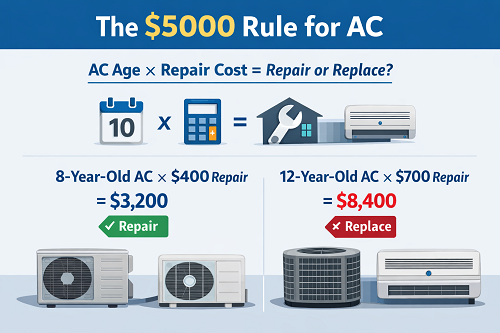
The $5000 rule for AC is one of the simplest and most reliable ways GTA homeowners can decide whether repairing or replacing an air conditioner makes better financial sense.
Here are the essential insights every Toronto-area homeowner should know for confident AC repair or replacement decisions:
- Apply the $5000 rule as your starting point by multiplying your AC’s age by the repair estimate—if the total exceeds $5,000, replacement is usually the smarter, more reliable investment for GTA homes.
- Factor in repair history and ongoing issues—if your AC has needed 3 or more repairs in 3 years, or struggles with consistent comfort, consider replacing it for hassle-free reliability.
- Don’t overlook energy efficiency—upgrading to a modern, high-SEER system can cut energy bills by 30–50% and unlock rebates, especially if your current unit is over 10 years old.
- Always get at least two professional quotes for repair vs. replacement and include all costs (parts, labor, diagnostics) to avoid surprises and make a truly informed choice.
- Professional assessments reveal hidden problems—licensed HVAC pros spot issues like refrigerant risks, airflow problems, and code concerns that quick calculations can’t catch.
- Regular maintenance pays off big—simple habits like changing filters and yearly tune-ups can extend AC lifespan to 12–15 years and reduce major breakdowns by over 40%.
- Consider the full picture—not just math—look at warranty status, comfort level, and total cost of ownership (including future power bills and repairs) when making your final call.
- Plan upgrades during off-peak times to secure better pricing, top-choice installation slots, and maximize available Ontario rebates for energy-efficient systems.
By using the $5000 rule alongside expert advice and routine care, Greater Toronto homeowners stay cool, comfortable, and confident—no matter what the summer brings. Dive into the full article for scenario breakdowns, cost comparisons, and practical next steps tailored to your home.
Introduction
You’re in the middle of a muggy Toronto summer when your air conditioner sputters out—again. The repair quote rolls in, and you’re left wondering, “Should I really fix this old unit, or is it finally time to replace?”
It’s a dilemma many GTA homeowners face—and getting it wrong can cost you hundreds, even thousands, in preventable expenses or uncomfortable days. That’s where the simple, powerful $5000 rule comes in: a formula trusted by local HVAC experts and busy families alike for making confident, cost-saving choices on the spot.
Here’s what makes this approach invaluable for Toronto-area homeowners:
- Cuts decision stress in the heat of an emergency
- Gives a clear repair-or-replace answer—even if you know nothing about ACs
- Protects your wallet and comfort, especially as both repair costs and summer temperatures rise across North York, Oakville, and beyond
No more second-guessing when every minute counts. Instead, you’ll walk away knowing:
- The quick math trick every homeowner can use
- Why this guideline works so well with GTA’s AC prices and lifespans
- What factors push the rule—and your AC—past its breaking point
- How to weigh all the real-world factors: warranty, energy bills, repair history, and more
“Multiply your AC’s age by the repair bill: Is it above $5,000? You may be ready for a smart upgrade.” It’s a decision-making shortcut that gets straight to the heart of what matters—your comfort and your budget.
Up next, see how the $5000 rule plays out in real-life scenarios and why it continues to set the gold standard for clear, local guidance on AC repairs and replacement.
Understanding the $5000 Rule: What It Is and Why It Matters
The $5000 rule is a trusted guideline used by HVAC professionals and homeowners across the GTA to decide when it’s time to repair or replace your air conditioner.
Picture this: If your AC is 10 years old and a technician quotes a $400 repair, you multiply age by cost—10 × $400 = $4,000. Because it’s under $5,000, repairing may make sense. If the same unit needs a $600 fix, the total jumps to $6,000—and replacement might be the smarter move.
The Formula Made Simple
Apply the $5000 rule in just two easy steps:
- Write down your AC’s age (years)
- Multiply by the estimated repair cost ($)
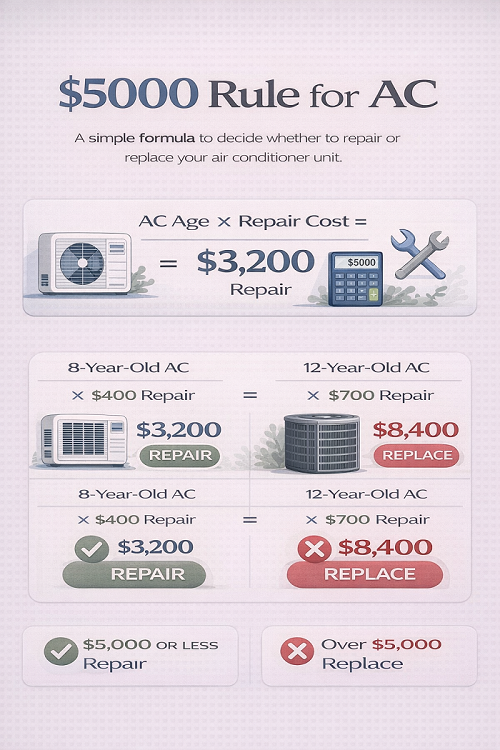
If your result is above $5,000, most experts recommend replacement for long-term savings and reliability. If it’s below $5,000, a repair may be more cost-effective, especially for newer systems.
Why This Rule Continues to Matter
The $5000 rule has deep roots in residential AC servicing, helping homeowners quickly weigh their choices—particularly useful for busy homeowners, families, and property managers in Toronto or Oakville juggling comfort and budget.
Here’s why the rule is so practical:
- Reduces stress when facing surprise breakdowns
- Provides a benchmark for making fast, informed decisions
- Fits the GTA’s typical AC lifespan of 10–15 years and rising service costs
A Benchmark—Not a Hard Rule
It’s important to remember: the $5000 rule is a starting point, not a strict rule.
Factors like repeat breakdowns, poor efficiency, and changing refrigerant regulations also play a crucial role. In today’s market, with replacement costs often between $10,000–$20,000 in the GTA, the $5000 benchmark is useful but not absolute.
Quotes that work for social media or video:
- “Multiply your AC’s age by repair cost: over $5,000? It’s time to talk replacement.”
- “The $5000 rule helps GTA homeowners make confident AC decisions—without second guessing.”
The key takeaway: Rely on the $5000 rule for a fast, practical decision framework, but always combine it with expert advice and a review of your AC’s full history for the best results.
Applying the $5000 Rule in Real-World Scenarios
Practical Step-by-Step Calculation
Picture this: your AC suddenly fails on a hot Toronto afternoon. Before making a repair call, apply the $5000 rule to make a quick, confident decision.
The formula is straightforward:
- Multiply the age of your AC (in years) by the estimated repair cost.
- If the result is over $5,000, it’s generally smarter to invest in a replacement.
Let’s break it down:
- Example 1: 8-year-old AC, $400 repair = 8 x $400 = $3,200 (repair might make sense).
- Example 2: 12-year-old AC, $700 repair = 12 x $700 = $8,400 (replacement is likely the wiser choice).
Here’s an at-a-glance table to help visualize scenarios:
| Age of AC | Repair Cost | Rule Result | Recommended Action |
|———–|————-|————-|———————–|
| 8 yrs | $400 | $3,200 | Repair if no major issues |
| 12 yrs | $700 | $8,400 | Replace for better reliability |
| 10 yrs | $350 | $3,500 | Repair, review warranty |
| 15 yrs | $450 | $6,750 | Replacement advised |
Typical repair costs in Toronto/Oakville can range from $250–$800 for fan motors or capacitors, to $1,200–$2,500 for compressor replacements.
To get an accurate cost:
- Obtain at least two professional quotes detailing labor, parts, and diagnostic fees.
- Include all related expenses—don’t just use the part-only price.
Interpreting the Result: Repair or Replace?
If the product of age and repair cost is under $5,000, repairing your AC is often a cost-effective solution—especially if your unit is under 10 years old and has a solid maintenance track record.
When the result exceeds $5,000, replacement tends to offer better long-term reliability, energy efficiency, and peace of mind. “If your math lands just under or just over $5,000, always weigh factors like ongoing repair history, energy bills, and warranty status.”
Keep these tips in mind:
- Check for active warranties—many Toronto-area ACs offer 10-year parts coverage.
- Consult with a licensed HVAC pro for borderline cases or recurring issues.
- Document your AC age and last major repair so you can apply this rule in minutes during an HVAC emergency.
A fast calculation helps protect your budget and your comfort. Knowing the $5000 rule empowers you to make clear, value-driven choices—before the next heat wave hits.
Factors Beyond the $5000 Rule: Making a Fully Informed Decision
Repair History and Ongoing Issues
If your AC has broken down multiple times in recent years, it could be a sign that the $5000 rule alone doesn’t capture the whole picture.
Many HVAC pros in Toronto consider this quick “red flag” zone:
- 3 or more repairs in 3 years often signals it’s nearing end-of-life.
- Recurring costs and downtime stack up, making replacement smarter than chasing small fixes.
One of the most common regrets from homeowners? “We kept repairing until the headaches just wouldn’t stop.”
Energy Efficiency & Operating Costs
Older AC units with low SEER (Seasonal Energy Efficiency Ratio) ratings eat up more electricity—especially during hot GTA summers.
When comparing an older 10 SEER unit to a new 16 SEER model:
- Monthly bills can be 30–50% higher with old tech.
- Upgrading can save $200–$500 per year on hydro, thanks to modern efficiency.
Take advantage of Ontario rebates and incentives—new high-efficiency units often pay for themselves faster than most expect.
Comfort, Reliability, and Performance
Picture this: Your AC runs loud, cools unevenly, or fails on the muggiest day.
Signs you’re not just dealing with a one-off repair:
- “Hot spots” and inconsistent cooling
- Humidity problems indoors
- Frequent system cycling or noise
If your system can’t keep you comfortable, peace of mind outweighs patchwork fixes.
Outdated Technology and Refrigerants
Many older systems use phased-out refrigerants (like R-22), which are now expensive and increasingly tough to source.
Other drawbacks of older setups:
- Replacement parts get pricey or nearly impossible to find.
- Service costs can spike due to limited refrigerant and older technology.
Toronto homeowners are moving away from aging tech, not just for savings, but for environmental compliance.
Market Trends and Changing Thresholds
Replacement costs in the GTA have climbed—expect $10,000 to $20,000+ for a modern AC with installation.
This means the $5,000 rule is a guide, not gospel:
- Today’s real value lies in total cost of ownership—energy, repairs, comfort, and resale.
- Choose solutions based on reliability, longevity, and family needs—not just math on paper.
Whether your AC is limping along or facing another big repair, stepping back for a full-picture assessment protects your comfort and wallet. The smartest call? Make a decision that balances long-term cost savings, reliable performance, and personalized home comfort—not just the next bill.
Comparing the Costs: Repair vs. Replace in the GTA
Real-World Cost Ranges and Common Repairs
In the Greater Toronto Area, AC repair costs vary widely depending on the issue.
Common repair costs (Toronto/Oakville averages):
- Capacitors: $250–$500
- Blower motors: $400–$900
- Evaporator coils: $1,200–$2,000+
- Compressors: $1,800–$3,000 and up
Most repairs under $1,000 are considered routine, but major components—like compressors or coils—often push costs higher.
Most GTA air conditioners last 12–15 years under regular use.
- Systems older than 10 years tend to require more frequent, expensive repairs.
- Hot, humid GTA summers stress older equipment and shorten its lifespan.
Replacement Investment and ROI
A new, professionally installed AC in Toronto or Oakville will cost $5,000–$12,000+ for standard residential units.
- High-efficiency or larger models can reach $15,000–$20,000 with extras or challenging installations.
- Warranties (often 10+ years for parts/compressor with professional install) add reliability and peace of mind.
Long-term value comes from:
- Lower monthly hydro bills thanks to energy-efficient technology (new models use up to 40% less energy).
- Greater reliability—no more breakdown calls during July heatwaves.
- Boosted home resale value, as buyers value upgraded, efficient HVAC.
“The right AC upgrade pays for itself—in comfort, savings, and sale value within a few Toronto seasons.”
Scenario Grid: Common Situations and Recommendations
Here’s how the repair vs. replace decision plays out in real life:
| Scenario | $5000 Rule Result | Best Move (GTA) |
|———————————————–|——————-|——————————|
| 8-year-old unit, $400 repair (capacitor) | $3,200 | Repair |
| 14-year-old unit, $1,000 repair (blower) | $14,000 | Replace |
| 12-year-old unit, $600 repair (coil leak) | $7,200 | Replace |
| Under warranty, minor issue | Varies | Repair (often covered) |
| 10+ years, 3+ repairs in 2 years | Usually high | Replace for reliability |
Picture this: You’re sweating through a July heatwave, waiting for a $2,000 repair on a 15-year-old AC—decisions get real, fast.
The most actionable rule: Multiply your unit’s age by the repair bill—if it tops $5,000, replacing is usually the smarter, safer investment.
The smart move for Toronto-area homeowners? Compare upfront costs, warranty, and ongoing energy savings, and talk to a local expert to weigh your unique situation. Whether you prioritize comfort today or value tomorrow, making the numbers work for you ensures peace of mind when it matters most.
When to Consult a Professional: Beyond the Rule of Thumb
Importance of Professional Assessment
A skilled HVAC professional sees what DIY research and guesswork can’t—like hidden leaks, improper airflow, or electrical safety risks that could impact your entire home.
While the $5,000 rule is a great quick-check, an expert inspection goes deeper, uncovering:
- System sizing and load calculations to ensure your AC is matched to your home’s needs
- Diagnosis of recurring issues, not just treating symptoms
- Evaluations for environmental safety and local code compliance
DIY diagnosis can easily miss silent warning signs—such as coil corrosion or faulty wiring—that could become emergency issues overnight.
“Don’t just trust a formula; trust a professional who sees what formulas can’t.”
What to Expect from a Trusted HVAC Visit
When BobbyAir visits your home, expect a step-by-step approach that makes every concern clear and manageable.
Here’s what our customers experience:
- Comprehensive system inspection: We check the life expectancy of your AC, reveal hidden inefficiencies, and look for worn parts
- Energy efficiency audits: Identifying how your AC’s SEER rating compares to today’s standards, and where you may be losing money month after month
- Comfort and safety checks: From uneven cooling and noisy units, to diagnosing the real root of discomfort in your GTA home
We value honest advice over upselling—our technicians lay out your options using plain language, real numbers, and zero-pressure recommendations.
“Great HVAC service isn’t only about repairs—it’s about making sure your comfort and safety come first.”
Planning for the Future
Protect your comfort and budget by planning ahead.
Staying proactive means:
- Regular filter changes (every 1-3 months) and annual maintenance to catch small issues before they become costly repairs
- Scheduling upgrades or replacements during off-peak seasons, when installation windows and local utility rebates can save you hundreds
- Collecting updated quotes every few years to track your system’s health and plan future investments
Picture relaxing on a hot July afternoon, confident your cooling system has been tuned and double-checked by a pro—peace of mind in every season.
The most valuable step you can take? Partner with a trusted local expert for ongoing maintenance and transparent advice. A professional assessment ensures your AC decisions are grounded in comfort, safety, and smart investment—never just numbers on a page.
Smart Maintenance and Prevention: Protecting Your AC Investment
Keeping your air conditioner in top shape is about more than comfort—it’s about saving money, avoiding emergencies, and getting the most from your investment.
A well-cared-for AC can last 12–15 years (sometimes more), while neglected systems often fail early and rack up costly repairs.
The Essentials: What Every Homeowner Should Do
For busy families and professionals, a few simple habits make all the difference:
- Change air filters every 1–3 months (monthly during heavy use or allergy season)
- Clear outdoor debris like leaves and grass from around your AC unit at least seasonally
- Schedule an annual professional tune-up to catch small issues before they become emergencies
Just these three steps can cut the risk of major AC problems by more than 40%, according to Canadian HVAC industry stats.
The Big Impact of Small Maintenance
Regular care does more than extend the life of your AC unit:
- Improves air quality and reduces allergens in your home
- Saves up to 15% on energy bills by keeping your system efficient
- Prevents surprise breakdowns during GTA heat waves (a major pain point for families and business owners)
Picture this: On a blazing July afternoon in Oakville, your neighbours are scrambling for emergency repairs, but you’re cool, comfortable, and worry-free because your system got its yearly check.
Affordable Maintenance Packages in Toronto
Most reputable HVAC providers—including BobbyAir—offer cost-effective maintenance plans designed for the GTA’s busy lifestyles.
These packages typically include:
- Spring and fall checkups
- Discounts on any needed repairs
- Priority scheduling (especially helpful during summer rushes)
- Honest, expert advice on system upgrades or replacements
For many Toronto-area homes, annual coverage costs less than a single emergency service call—and delivers serious peace of mind.
Long-Term Comfort and Savings
Consistent maintenance is the secret to lower repair costs, longer AC life, and reliable home comfort you don’t have to think twice about. “A little prevention is worth a lot of cool, comfortable summers”—and that’s a promise the whole family will feel.
HVAC maintenance best practices
Conclusion
Choosing the right time to repair or replace your AC can mean the difference between calm comfort and an expensive, stressful emergency. With the $5000 rule, you have a powerful decision tool at your fingertips, giving you confidence when unexpected breakdowns strike in the GTA.
By using this trusted benchmark—while weighing in your system’s age, repair history, and energy costs—you put yourself in control, ready to make fast, value-driven choices for your home and budget.
—
Key Takeaways to Apply Now:
- Multiply your AC’s age by the repair estimate—over $5,000? Replacement is often your smarter investment.
- Track your system’s warranty and recent repairs to catch patterns before costs stack up.
- Schedule annual professional maintenance to reduce the risk of surprise breakdowns and extend your AC’s life.
- Request at least two quotes from licensed GTA HVAC pros for repairs or upgrades—never settle for guesswork.
- Consider future comfort, energy savings, and available rebates when planning upgrades.
—
Ready to protect your comfort and make every AC dollar count? Here’s where to start:
- Document your AC’s age and last repair now—so you’re prepared before the next heatwave.
- Book a professional AC inspection with a trusted local expert like BobbyAir and discuss your unique options.
- Join a preventative maintenance plan to lock in peace of mind, lower bills, and priority service.
—
Smart homeowners don’t leave comfort to chance—they take confident action, use expert guidance, and stay a step ahead of Toronto’s hottest days.
“Multiply the numbers, but trust the experts—because the real value is in comfort, reliability, and knowing your home is in good hands.”
preventative HVAC maintenance plans
FAQs
What is the $5000 rule for AC?
The $5000 rule for AC helps homeowners decide whether to repair or replace an air conditioner by multiplying the unit’s age by the repair cost. If the total exceeds $5,000, replacement is usually recommended.
Is the $5000 rule for AC accurate?
The $5000 rule for AC is a reliable guideline, but it should be combined with factors like energy efficiency, repair history, and warranty coverage for the best decision.
Does the $5000 rule for AC apply to older systems?
Yes. The $5000 rule for AC is especially useful for systems over 10 years old, where frequent repairs and poor efficiency often make replacement more cost-effective.