
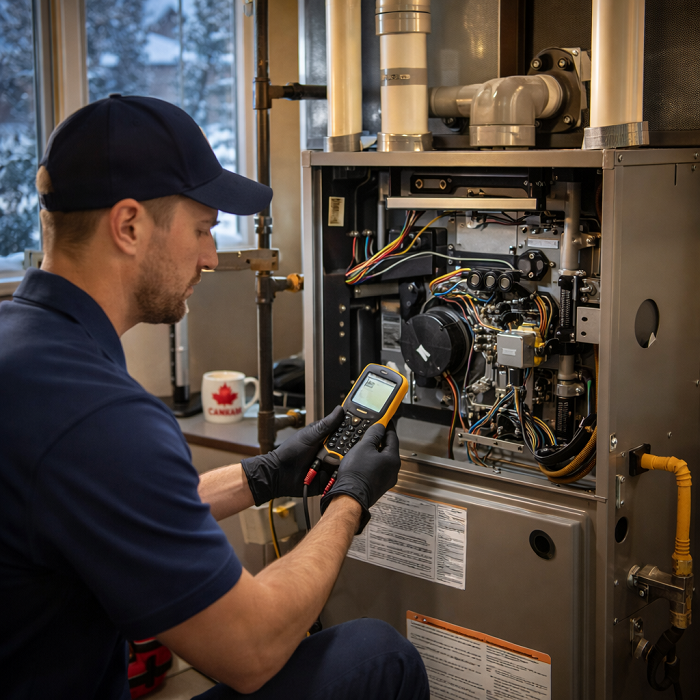
Furnace repair in the GTA becomes urgent the moment winter temperatures drop and your home loses heat—this guide shows you exactly how to act fast, stay safe, and avoid costly breakdowns.
- Check thermostats and power first—over 25% of GTA furnace issues are solved by adjusting the thermostat, replacing batteries, or resetting the circuit breaker.
- Change furnace filters every 1–3 months to prevent blockages and sudden shutdowns—this single step can cut energy use by up to 15% and is the #1 way to avoid no-heat emergencies.
- Listen for warning signs—strange noises, inconsistent heat, or a triggered CO alarm signal immediate safety risks; evacuate and call professionals, never attempt risky DIY fixes.
- Schedule annual furnace tune-ups before winter—routine pro maintenance costs $150–$250 and can reduce breakdown risk by 80% and save up to 20% on repairs long-term.
- Use smart thermostats and seal duct leaks—automated temperature control and duct sealing can lower heating bills by $300 per year and stop up to 30% of wasted energy.
- Prioritize safety with fast 24/7 service—in the GTA, unreliable heat can become an emergency overnight; always choose a certified, locally-based HVAC provider like BobbyAir for quick, transparent support.
- Leverage Ontario rebates for high-efficiency upgrades—replacing old furnaces can cut your carbon footprint by a ton annually and unlock up to $1,200 in rebates while increasing property value.
- Trust local expertise for lasting comfort—with Toronto’s unique mix of new and aging homes, a team that knows GTA infrastructure delivers the fastest, safest furnace solutions and real peace of mind.
Stay warm, safe, and in control—dive into the full guide for detailed troubleshooting, expert maintenance tips, and energy-saving strategies tailored to Greater Toronto homes.
Furnace Repair in the GTA – Common Problems & Fast Solutions
The moment your furnace sputters to a halt in the middle of a Toronto cold snap, comfort and safety can turn to stress—and fast. Whether you live in North York, Oakville, or anywhere across the GTA, you know how quickly a heating issue can derail family routines or disrupt a busy workday.
One in three emergency HVAC calls in the GTA is triggered by simple, preventable issues—like clogged filters or tripped breakers. Small missteps often lead to bigger, costlier problems if left unchecked.
But it’s not just about avoiding discomfort. Modern, energy-efficient furnace systems can slash your winter bills by up to 20%, put real money back in your pocket, and ensure warmth when you need it most.
If you’ve ever wondered:
- Why does my furnace cycle on and off constantly—or make strange noises at night?
- Which maintenance tasks really keep the heat flowing and costs down?
- When should I fix things myself, and when do I need a fast, qualified pro?
- What does quality installation or 24/7 emergency service look like in the GTA?
You’re not alone. Local winters put every HVAC system to the test, and families count on reliable solutions—backed by clear expertise and responsive service.
This guide is packed with step-by-step troubleshooting tips, actionable maintenance advice, and local insights that give you more control and peace of mind. You’ll learn:
- How to spot—and solve—the most common furnace problems
- Essential DIY tasks to keep your system running smoothly
- When to call a trusted technician for rapid, guaranteed repairs
- Ways to boost energy efficiency, comfort, and long-term savings
Your home deserves comfort and safety, no matter how wild the weather gets. Discover exactly what it takes to keep your furnace—and your family—protected and comfortable right here in the GTA.
Wondering how your furnace system works, or what really matters for efficiency and reliability? Keep reading for a clear breakdown of everything homeowners and property managers need to know.
Understanding Your Home Furnace System
The Greater Toronto Area (GTA) is home to a range of furnace systems, each with unique features designed to keep homes comfortable through Ontario’s unpredictable weather.
Most GTA homes rely on one of the following:
- Gas furnaces: The most common type, known for efficiency and rapid heating
- Electric furnaces: Often used where gas isn’t available, offering reliable, steady warmth
- Oil furnaces: Typically found in older or rural properties
Core Furnace Components and Integration Points
A modern furnace works in tandem with the rest of your HVAC setup, including air conditioning and ventilation systems, to maintain consistent comfort year-round.
Key components you’ll find in every system include:
- Thermostat: Your control center for temperature adjustment
- Blower motor: Distributes warm air throughout the home
- Burner unit: Initiates heat (gas or oil models)
- Heat exchanger: Transfers heat safely to the air
- Safety controls: Protects against overheating and fuel misfires
Connected ductwork channels conditioned air; proper integration keeps energy bills in check and air healthy.
Why Energy Efficiency and AFUE Ratings Matter
Energy efficiency is top-of-mind for GTA homeowners. Modern units boast Annual Fuel Utilization Efficiency (AFUE) ratings above 90%, meaning over 90% of fuel gets converted into usable heat.
Factors impacting furnace efficiency:
- Insulation quality: Well-sealed homes need less heating for the same comfort
- Smart thermostats: Automate comfort and reduce waste—some studies show up to 12% annual savings
- Regular filter changes: Directly affect airflow and system longevity
Picture this: A North York family upgrades to a high-efficiency model, installs a smart thermostat, and sees winter heating bills drop by $300—real money in your pocket.
Signs of Quality Installation and Trouble Ahead
A professionally installed furnace means:
- No strange noises, consistent airflow, and even temperatures
- Quick cycling or unresponsive thermostats, by contrast, mean it’s time to investigate
Look for:
- Certified installers who offer clear communication and ongoing support
- Tidy, labeled ductwork and wiring
- Documentation outlining system specs and warranties
Real Home Example
In Oakville, a 2,000 sq. ft. home with a high-efficiency gas furnace and smart thermostat is quiet, evenly heated, and enjoys lower maintenance costs—a real showcase of how modern systems deliver everyday comfort.
Understanding how your furnace fits with your HVAC, what efficiency really means, and which warning signs require attention keeps your home warm, safe, and cost-effective all year round.
Fast Furnace Troubleshooting: Step-by-Step Essentials
Thermostat and Power Checks
Before you reach out for emergency help, always start by double-checking your thermostat.
- Set it to “heat” mode and ensure the temperature is a few degrees higher than your current room temperature.
- If you have a programmable thermostat, replace the batteries—dead batteries are a surprisingly common issue in Toronto-area homes.
- Confirm the furnace power switch is ON (usually located on or near the unit).
- Inspect your circuit breaker: Is it tripped? Make sure it’s flipped to “on.”
More than 25% of furnace service calls in the GTA are caused by simple thermostat or power setup errors—a quick DIY check could save time and money.
“A five-minute thermostat inspection can prevent an unnecessary emergency call—that’s savvy homeownership.”
Filter, Reset, and Safety Precautions
Next, tackle airflow and quick resets.
- Dirty or clogged air filters block airflow and can shut down furnaces. Change your filter every 1–3 months, especially during peak winter use.
- To safely reset the unit: Find the reset button (usually on the blower motor). Press it once. If the furnace doesn’t restart, avoid repeated presses as this can cause damage.
- Stay alert for urgent safety signs:
- Gas smells (like rotten eggs): Leave your home and call your gas utility immediately.
- Odd noises (banging, buzzing, squealing): These often signal mechanical or electrical issues.
- Flickering pilot lights (or any flame irregularity): May indicate combustion problems.
“Changing your furnace filter regularly is the single best way to prevent no-heat emergencies in Toronto winters.”
Basic Gas and Oil Furnace Safety
Troubleshooting varies by furnace type:
- For gas systems, confirm the gas valve is open—this is typically parallel to the pipe when ON. Never use force or tools to open/close.
- If you ever detect a gas odor, don’t investigate—evacuate and contact your utility. Safety first, repairs second.
- Oil furnaces require checking for fuel in the tank and obvious leaks; electric systems, meanwhile, rely on circuit health.
A recent Toronto survey found that 40% of gas furnace calls were traced to valve position mix-ups or safety lockouts.
“Picture this: You turn on the heat, but nothing happens. One look at your thermostat—or a fresh air filter—can turn the day around.”
At-a-Glance Troubleshooting Flowchart
- Thermostat set to heat and working?
- Power on at switch and breaker?
- Filter clean?
- Reset attempted once?
- No urgent safety issues (smell, noise, flickering flame)?
If you answer “no” or spot a red flag at any step—time to call a professional.
Catching small missteps early keeps your home comfortable, safe, and spares you emergency downtime. A few quick checks can often restore your furnace fast—but trust your instincts and call BobbyAir for anything beyond the basics.
Preventative Maintenance & DIY Care
Essential Homeowner Tasks
Picture this: A quick 15-minute check could prevent a cold night and an emergency call.
Prioritize these seasonal maintenance essentials to keep your furnace humming all winter:
- Clean the blower motor, burner, and air intake every fall and spring to remove dust buildup that restricts airflow
- Check and tighten all electrical connections—look for signs of corrosion, which can trigger erratic furnace shutdowns
- Inspect and gently clean the flame sensor using a Scotch-Brite pad until it shines (no special tools or tech degree needed)
- Ensure every vent and duct is open and free of debris or furniture, using a flashlight to spot and remove obstructions
Did you know that most no-heat calls are caused by clogged filters or blocked airflow? A simple monthly filter change is your best defense—replace filters every 1–3 months depending on your air quality.
Safety Devices and Controls Inspection
Your furnace relies on a few critical safety controls to keep your family protected:
- The hi-limit switch cuts power if things get too hot
- The flame sensor ensures safe ignition
- The pressure switch verifies safe airflow before running
You can quickly test these by:
- Listening for normal startup cycles (no rapid clicks or commercial buzzes)
- Watching for steady pilot or burner flames (skip flickers or odd noises)
- Consulting your owner’s manual for safe lubrication points on blower and motor—never lubricate blindly
Remember: “If something smells off or you hear a sharp metallic clank—pause and call a professional.”
Maintenance Scheduling and Professional Touchpoints
For optimal performance in the GTA’s wild climate swings (think –20 °C in January to +30 °C in summer), follow this schedule:
- DIY checks and cleaning: Every 1–2 months or as seasons change
- Professional furnace tune-up: Once a year, ideally before winter—expect a full safety system check, component cleaning, and efficiency test
Typical professional maintenance in Toronto costs $150–$250, but can cut energy waste by 10–15% and extend equipment life by years.
Takeaway: With these simple routines, you’ll avoid 80% of heating emergencies—leaving you more nights warm, safe, and in control of your home’s comfort.
Most Common Furnace Problems: Identification and Solutions
Spotting Warning Signs
Strange furnace noises and inconsistent heating are usually your first clues that something’s off. Buzzing often means an electrical issue, banging can signal loose components, and persistent squealing indicates a worn or failing blower belt.
If your furnace turns on and off rapidly, heats some rooms but skips others, or your filter clogs in just days, you’re witnessing classic early warning signs.
When a carbon monoxide detector blares, leave your home immediately—then contact the fire department and your HVAC pro. Quick action is non-negotiable: 430 Canadians are sent to hospitals each year due to CO poisoning.
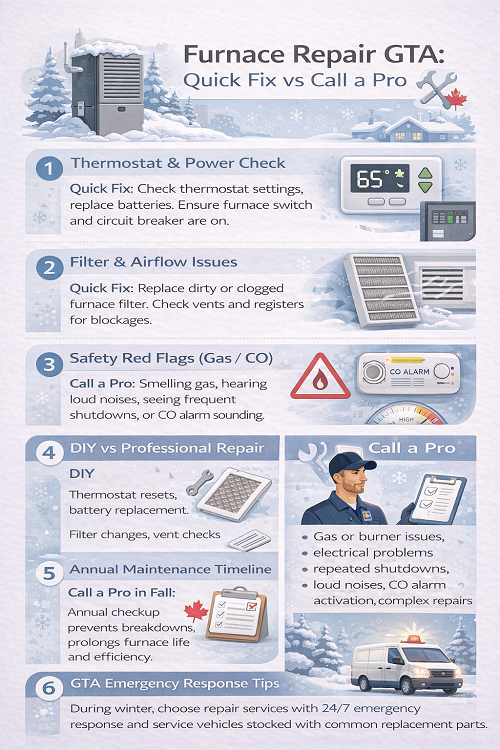
“Your furnace talks—listen for the warning signs and don’t ignore alarm bells.”
Typical Failure Points and Remedies
Most emergency service calls in the GTA trace back to a few repeat offenders:
- Ignition and pilot issues: If your furnace clicks but won’t ignite, try resetting, but call a tech if it repeats—gas-related repairs should never be risky DIY.
- Blower motor malfunctions: Squealing or failure to start may mean you need professional motor or bearing service; check for dust buildup as a first step.
- Electrical/board failures: A tripped breaker or unresponsive furnace often means a power supply issue—flip the breaker back on, but if it trips again, time to call an expert.
- Filter and airflow shutdowns: A clogged filter is the #1 cause of sudden shutdowns—replace every 1-3 months to avoid a cold home.
“Eight out of ten ‘no heat’ furnace calls are solved by a fresh filter or power reset.”
Homeowner Toolkit
To troubleshoot safely and efficiently, keep these tools on hand:
- Screwdrivers (flat and Phillips)
- Multimeter (for checking voltage and continuity)
- Flashlight
- Shop vacuum (for clearing filter and blower dust)
Quick DIY test: Set your multimeter to “voltage,” check incoming power at the furnace’s terminal strip, and look for readings that match your user manual. Never proceed if you notice burnt wiring, leaks, or persistent tripping—these require a certified tech.
“A well-prepared toolkit and a fresh air filter are your best defenses against a cold Toronto night.”
If you spot gas smells, repeated shutdowns, or a triggered carbon monoxide alarm, shut down the furnace and call for help immediately.
For GTA homeowners, quick troubleshooting—like changing filters, checking power, and knowing when to call a pro—keeps your home cozy and safe. Always prioritize family safety, and remember: listening to your furnace can save you from costly repairs and winter discomfort.
When to Call a Professional: Safety, Reliability, and Value
Red Flag Situations
Certain issues mean you need a qualified technician immediately—no exceptions. If you smell gas, hear your carbon monoxide detector alarm, or notice your furnace repeatedly shutting down, do not attempt DIY repairs.
Other red flags include:
- Backdraft or exhaust problems: If you see soot around your furnace or feel warm air blowing from vents when the system is off, there could be dangerous combustion gas leaks.
- Visible water leaks, sparks, or scorch marks near the furnace.
- Repeated breakdowns or components failing right after previous repairs.
“If you ever notice a rotten egg smell, evacuate immediately—this could save your life.”
Selecting a Trusted GTA Furnace Expert
Not all HVAC contractors offer the same level of reliability or transparency. For peace of mind in the Greater Toronto Area, look for:
- Valid certifications (TSSA or equivalent), years of hands-on experience, and verified reviews from local homeowners.
- A clear commitment to 24/7 emergency service, so help arrives when you actually need it.
- Transparent warranties and written satisfaction guarantees—ask upfront if their work is backed by both manufacturer and service provider.
BobbyAir, for example, operates with a team based right here in Toronto, promising rapid response times and genuine neighborhood expertise. “Picture this: It’s -20°C and your furnace fails—BobbyAir’s team arrives the same night, no excuses, no upcharges.”
Cost, Warranty, and Value Considerations
Emergency repairs in the GTA often cost $250–$800+, depending on the part and timing. Routine servicing is usually $120–$250, and trusted providers explain all costs up front.
Keep these points in mind:
- Manufacturer warranties cover major parts for 5–10 years, but labor is often extra unless you have a service contract.
- Preventative maintenance extends equipment life and lowers the chance of breakdowns—saving the average home up to 20% on repair costs annually.
- Listen to your neighbors: “BobbyAir fixed a carbon monoxide leak before it became a crisis—all covered by warranty.”
“Don’t gamble on DIY fixes with your family’s safety—trusted pros deliver fast, guaranteed results.”
If you see warning signs or just want lasting peace of mind, a professional inspection delivers both immediate safety and long-term savings—real value for every Toronto home.
Maximizing Furnace Performance: Energy Efficiency and Long-Term Comfort
Everyday Steps for Homeowners
Picture this: it’s a cold Toronto morning and your furnace kicks in smoothly because basic maintenance is on point.
Stay ahead with these essentials:
- Replace your air filter every 1–3 months, especially during peak heating season—clean filters can reduce energy consumption by up to 15%.
- Set your programmable thermostat so temperatures drop automatically at night or when you’re away. This simple change can save $50–$100 per year.
- Keep vents and returns clear of furniture, dust, or pet hair to maximize airflow—blockages force your furnace to work harder and shorten its lifespan.
- Check for cool drafts at duct connections and seal leaks with specialized foil tape—air loss through leaks can account for up to 30% of wasted heat.
A little attention to airflow and temperature control means less wasted energy and fewer surprise breakdowns.
“The best time to prevent furnace troubles? Before they start—with smart, simple daily habits.”
Upgrades and Modern Controls
Ready for next-level comfort?
- Smart thermostats learn your routines and adjust automatically, cutting monthly bills by up to 10%. Voice controls and mobile access make climate control easy even on the busiest days.
- Zoning systems divide your home into personalized comfort zones, so unused rooms aren’t overheated—old North York homes are perfect candidates for fresh zoning upgrades.
- Considering an upgrade? High-efficiency furnaces with AFUE ratings above 95% are the new GTA standard, often paying for themselves within 5–7 years through savings and reliability.
Imagine checking your phone and seeing at a glance that every room is cozy—and your energy use is lower than ever.
“A smart thermostat upgrade is the quickest route to instant savings and long-term comfort.”
Environmental Impact and Ongoing Savings
Energy-efficient strategies benefit more than just your utility bill:
- Lower energy use means fewer greenhouse gas emissions—an average new furnace can reduce household CO₂ output by over a ton each year.
- Homeowners in Ontario may qualify for rebates or incentives up to $1,200 for eligible high-efficiency upgrades through programs like Enbridge Gas.
- Replacing outdated systems can increase property value and boost indoor air quality.
BobbyAir makes it easy, providing personalized upgrade guidance and supporting families with education on rebates and energy-conscious options.
“Switching to an efficient furnace is a win for your wallet, your comfort, and the environment—all at once.”
Everyday habits and the right upgrades will keep your home warmer, your bills in check, and your furnace going strong. Investing in energy efficiency means comfort today—and reliable, lower-cost heating for years to come.
Local Insights: Furnace Challenges and Solutions in the Greater Toronto Area
GTA’s Unique Furnace Demands
Winter in the GTA isn’t just cold—it’s unpredictable. Every season, Toronto homeowners face sudden temperature drops, windchill warnings, and multi-day snow events.
A furnace breakdown can mean:
- Immediate risks to comfort and safety, especially for families or seniors
- Rapid drops in indoor temperatures—as much as 10°C in a few hours when outdoor temperatures plunge below -15°C
- Strain on older systems as they struggle to keep up with extended cold snaps
Picture this: It’s 7 p.m. during a January frost alert, and your furnace stops. In the GTA, fast, local repair isn’t a luxury—it’s survival.
Local Infrastructure: Old Meets New
The Greater Toronto Area’s heating challenges are shaped by neighbourhood-specific factors:
- North York’s aging infrastructure often means retrofitting classic homes with modern, efficient furnace technology—and identifying legacy wiring or ductwork.
- Oakville’s new builds come with advanced HVAC systems, but even these need professional calibration and maintenance for peak energy efficiency.
- With over 45% of GTA homes being more than 40 years old, many households benefit from proactive furnace evaluations before winter arrives.
Quotable: “In Toronto, an ounce of HVAC prevention is worth a pound of frosty intervention.”
24/7 Emergency Service: GTA Essentials
Extreme weather can strike any time—nights, weekends, or holidays.
- BobbyAir’s 24/7 response team ensures fast repair, day or night, with average on-site arrival times under 2 hours during peak emergencies.
- Emergency calls surge by up to 60% during cold snaps, making reliable local availability essential for peace of mind.
Memorable moment: Imagine a technician, rolling up in the snow at 2 a.m., restoring heat before pipes freeze. That’s not just service—that’s neighbourhood commitment.
Real Community Presence & Impact
BobbyAir isn’t just a name—it’s a trusted local partner.
- Customer testimonials: “They kept my family safe during one of the coldest nights—unmatched professionalism and speed.”
- Local partnerships: Supporting GTA schools and seniors’ programs with education on energy efficiency and safe heating.
- Sustainability focus: Guiding homeowners through Ontario rebate programs for efficient furnace upgrades and reducing annual energy costs by up to 20%.
“Local expertise makes all the difference during a GTA winter. We know the streets, the homes, and the urgency.”
When the cold hits, remember: choosing a responsive, regionally-rooted HVAC partner can mean the difference between a quick fix and days without heat. Make your first call the right one—reliable, professional help is always close at hand in the GTA.
carbon monoxide safety guidelines
Conclusion
Your furnace is more than just a machine—it’s the heart of your home’s comfort, energy savings, and safety, especially during unpredictable GTA winters. The right knowledge and fast action empower you to keep every room warm, bills under control, and your loved ones secure—no matter what the weather brings.
Take the next step toward comfort and peace of mind with these actionable strategies:
- Swap out your furnace filter every 1–3 months—a simple task that delivers cleaner air and prevents 80% of emergencies.
- Test your thermostat and power connections now, not after the first cold night—quick fixes start here.
- Schedule annual professional maintenance for peace of mind, efficient heating, and warranty protection.
- Watch for unusual noises, gas smells, or frequent shutdowns, and always call a certified HVAC expert before a small issue grows.
- Explore high-efficiency upgrades and Ontario incentives—these can cut your costs and environmental impact for years to come.
Ready to act?
- Block out 10 minutes this week to check your thermostat, power, and filter—a fast tune-up can make all the difference.
- If you spot anything unusual, call BobbyAir’s 24/7 emergency team—help is always close by, night or day.
- Ask about rebate-eligible upgrades or set up your next maintenance visit to lock in savings and comfort before winter hits.
A reliable furnace means more than warmth—it’s a promise of safety, savings, and ease all year round, delivered by professionals who know your community and your needs. With every smart step you take, you create a home that’s not just cozy, but confidently prepared for anything a Toronto winter can throw your way.
“Secure your comfort, safeguard your family—because a warm home is peace of mind, and you deserve both.”
HVAC maintenance services in the GTA
FAQ
How fast can I get furnace repair in the GTA?
Most emergency furnace repair services in the GTA offer same-day or 24/7 response, especially during winter cold snaps.
Is furnace repair in the GTA expensive?
Minor repairs may cost $150–$300, while emergency or part replacements can range from $250–$800 depending on timing and severity.
When should I call a professional instead of DIY?
If you smell gas, hear loud mechanical noises, experience repeated shutdowns, or a CO alarm sounds, stop immediately and call a certified GTA furnace technician.
Does furnace repair qualify for Ontario rebates?
Repairs usually do not, but furnace replacements or upgrades to high-efficiency models may qualify for rebates up to $1,200 in Ontario.