
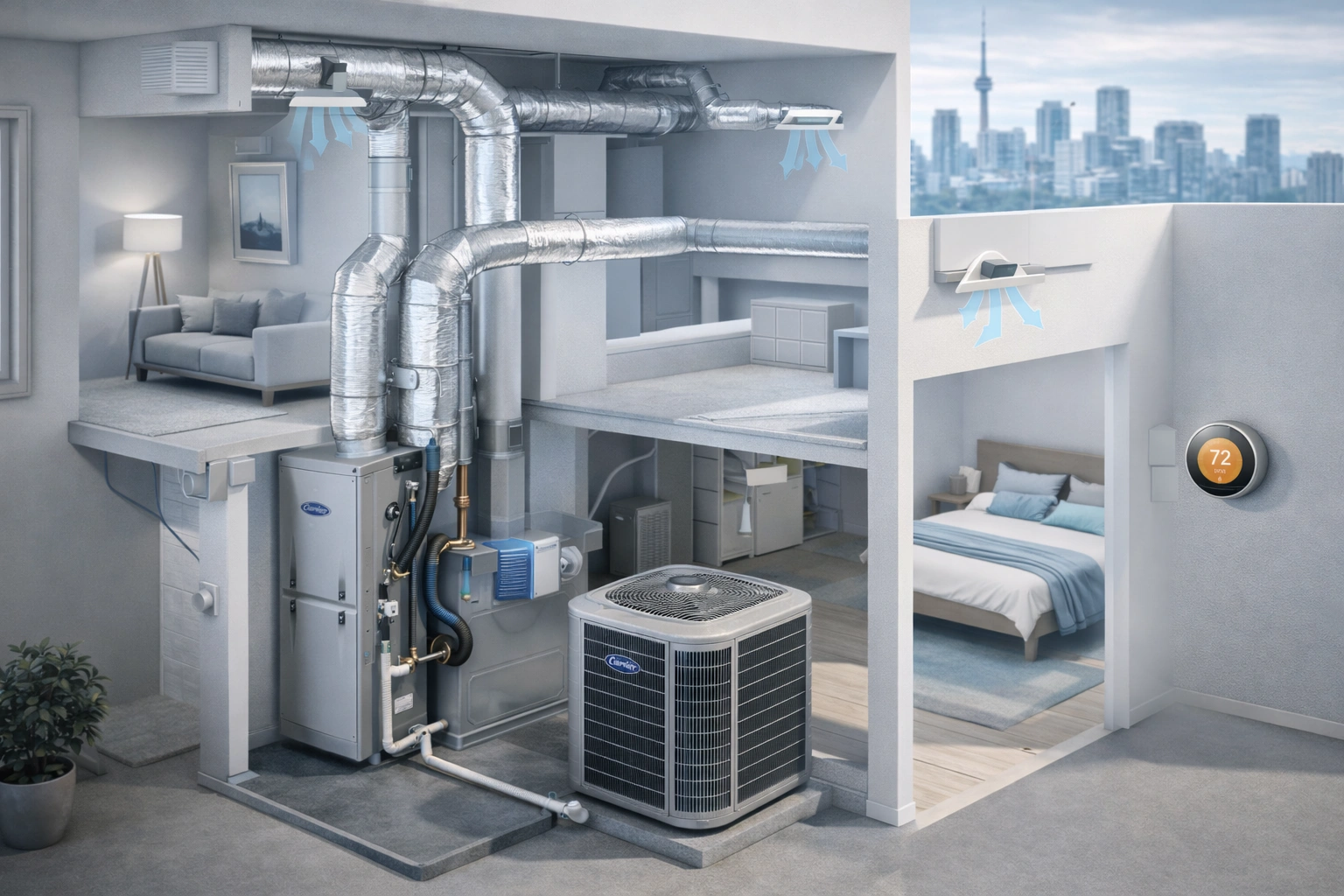
What Does an HVAC System Include? Understanding your HVAC system empowers you to maximize comfort, energy savings, and indoor air quality year-round—especially in Toronto’s fast-changing climate. From thermostats and furnaces to ductwork and air filters, knowing how each HVAC component works helps GTA homeowners and businesses prevent breakdowns and reduce energy costs.
- Every HVAC system relies on core parts—thermostat, furnace or heat pump, air handler, evaporator/condenser coils, ductwork, and filters—all working in harmony for consistent comfort and healthy air.
- Upgrading to a smart thermostat can deliver remote control, learning features, and up to 10% energy savings—a simple first step for busy Toronto-area homes.
- Regular maintenance is essential—changing filters every 1-3 months and scheduling annual pro tune-ups can cut energy bills by up to 20% and prevent emergency breakdowns.
- Premium air filters and indoor air quality add-ons—like HEPA filters, humidifiers, or UV purifiers—provide allergy relief, protect your HVAC, and support cleaner, healthier GTA homes.
- Proper ductwork and insulation upgrades can boost efficiency by 15-20% while delivering even temperatures and cleaner air to every room, even in older Toronto properties.
- Recognize critical warning signs—including uneven heating/cooling, rising bills, persistent noises, or a system over 12-15 years old—and be prepared to consider timely upgrades to avoid costly emergencies.
- Emergency response matters—during cold snaps or summer heat waves, choose a provider with 24/7 service and fast response times to protect your comfort and safety.
- Leverage local incentives and rebates—GTA residents can unlock up to $10,000 for energy-efficient upgrades, making modern comfort more affordable than ever.
Stay proactive and keep key HVAC parts in top shape to enjoy year-round comfort, lower bills, and lasting peace of mind—explore the full article for expert guidance and actionable next steps.
What Does an HVAC System Include in a Modern Home?
Picture this: it’s the coldest night in January, and your furnace suddenly stops—putting your family’s comfort (and the morning routine) at risk. In the GTA, where temperature swings can hit 15°C in a single day, an HVAC system isn’t just a luxury—it’s the backbone of safe, healthy living.
Whether you’re a busy North York professional, an Oakville homeowner seeking lower bills, or a property manager responsible for tenant comfort, understanding your HVAC’s essential parts can save you from stress, prevent costly surprises, and put control back in your hands.
Surprisingly, most breakdowns and high energy bills come down to a single overlooked part—from a forgotten air filter to a thermostat on the fritz. The good news? A well-maintained, modern HVAC can cut energy costs by up to 20%, keep every room comfortable, and protect your family’s air—all year.
In this quick guide, you’ll discover:
- What each major HVAC part actually does—in plain English, no confusing jargon
- How a connected system keeps you comfortable through Toronto’s wildest weather
- Key habits that reduce breakdowns and boost efficiency (and keep emergency calls to a minimum)
- Local tips tailored for GTA homes and offices—including retrofits, rebates, and how to spot small issues before they become big ones
You’ll also see real-world examples, quotable insights, and actionable steps to make sure your HVAC works for you—not the other way around.
Curious what’s happening behind the vents, and how simple changes can mean fresher air and lower bills? Let’s open the front panel and explore how every part of your HVAC system works together for your comfort, safety, and peace of mind.
Overview of Modern HVAC Systems: How Parts Work Together
An HVAC system—short for Heating, Ventilation, and Air Conditioning—keeps GTA homes and businesses comfortable year-round by regulating temperature, air quality, and humidity.
Every HVAC has one goal: deliver reliable comfort and fresh, healthy air to every corner of your property, regardless of Toronto’s bitter winters or humid summer days.
How HVAC Parts Form a Complete System
Think of your HVAC system as a carefully balanced network, with each part working together to create a seamless experience.
Here’s how the main components connect:
- Thermostat: The “brain,” directing your system based on your chosen temperature
- Furnace or Heat Source: Heats the air using gas, electricity, oil, or a modern heat pump
- Air Handler & Blower Motor: Moves heated or cooled air through your space
- Evaporator Coil & Condenser Unit: Transfer heat and moisture in or out of your building, depending on the season
- Ductwork & Vents: Deliver and return air, serving every room with comfort and efficiency
Picture this: On a snowy February night in North York, your thermostat signals the furnace, the blower quietly circulates warm air through insulated ducts, and every room feels inviting—while air filters silently trap dust for your family’s health.
Why a Balanced System Matters
When all parts are functioning in harmony, you get:
- Consistent temperatures in every room
- Low energy bills thanks to efficient airflow and advanced heat transfer
- Cleaner, fresher air protected from allergens and dust
HVAC isn’t just about heating and cooling; it’s about peace of mind for busy families and business owners who want reliability every day.
A single overlooked part—from a dirty air filter to a sluggish blower—can disrupt comfort, spike energy costs, or impact indoor air quality.
Real-World Outcomes and Actionable Insights
Research shows that an efficient, well-maintained HVAC can lower energy bills by up to 20%—a savings you’ll notice, especially during Toronto’s extreme seasons.
Some key habits to protect your system:
- Replace filters every 1-3 months
- Schedule professional maintenance yearly
- Watch for uneven temps and call in help early
When your HVAC works as a team, you get more than just warmth or cool air—you gain healthier indoor space and real cost savings.
Takeaway: Investing in HVAC care delivers year-round comfort, cleaner air, and savings that pay back every month. For homeowners in the GTA, a connected system isn’t a luxury—it’s the heart of everyday comfort.
The Thermostat: System Control and User Interface
Your HVAC system begins and ends with the thermostat—the “brain” of comfort control in every Greater Toronto home and business.
Placed on an indoor wall, the thermostat constantly monitors indoor temperatures and sends commands to the heating or cooling system, keeping your space cozy in January or cool in July.
When you adjust the thermostat—even by a single degree—you’re telling the whole system to work harder, rest, or hold steady.
Thermostat Types: From Manual to Smart
Today’s Toronto homeowners can choose from three main thermostat styles, each with unique benefits:
- Manual: Simple, reliable dials or switches—turn it up or down and you’re done. Best for those who prefer a traditional approach.
- Programmable: Set different temperatures for specific times of day. These can reduce energy costs by up to 10% simply by turning the heat down while you’re asleep or away.
- Smart thermostats: Connected to Wi-Fi, these allow for remote control by smartphone, voice assistants, or home automation platforms. Some even learn your schedule and adjust settings automatically for maximum savings.
Whether you own a heritage semi or a new build condo, upgrading your thermostat is one of the fastest ways to boost efficiency.
Picture this: With a smart thermostat, you can lower the temperature from your phone while stuck on the Gardiner, ensuring comfort—and savings—when you get home.
Seamless Integration and Everyday Convenience
Modern systems allow you to:
- Manage your HVAC from anywhere with a mobile app
- Integrate with other smart devices (lighting, security, etc.)
- Receive maintenance alerts, filter change reminders, and even local weather reports
“A smart thermostat is like putting your comfort on autopilot—saving time, energy, and money without you lifting a finger.”
For busy GTA homeowners and property managers, these features mean less worry and more control, especially during Toronto’s unpredictable seasons.
The right thermostat puts you in command, improves energy efficiency, and can easily adapt to your schedule—helping you spend less time thinking about temperatures and more time enjoying your home or business.
Core HVAC Components and Their Functions
Understanding your HVAC system means knowing how each core component impacts your comfort, energy use, and even your family’s health.
Furnace and Heat Source
The furnace is your home’s main heat provider, usually tucked away in the basement or a utility closet.
Furnaces can run on:
- Natural Gas: The most common in Toronto, offering quick, efficient heat
- Electric: Ideal for condos or homes without gas access
- Oil: Occasionally found in older homes
- Heat Pumps: Growing in popularity for their year-round efficiency
The heat exchanger keeps dangerous gases separate from breathable air, while the combustion chamber safely burns fuel. You’ll know it’s working when you feel a rush of warm air within minutes of turning up your thermostat.
Imagine a cold GTA winter night—your furnace quietly switches on, keeping every room cozy without a second thought.
Air Handler, Blower Motor, and Distribution Fan
Think of the blower motor as the workhorse, pushing heated or cooled air through your ductwork.
Key benefits:
- Even airflow: Prevents hot or cold spots in any room
- Customized handling: Dedicated air handlers fit different home layouts or commercial setups
A smooth running blower means every bedroom, office, and shop floor stays comfortable year-round—no silent corners left out.
Evaporator Coil
The evaporator coil (placed near your furnace or air handler) is the star in cooling mode, absorbing heat and humidity from the air.
A high-performing coil ensures:
- Lower indoor humidity—an absolute must for those muggy Toronto summers
- Consistent cooling for entire floors, not just select spaces
Outdoor Condenser Unit (Coil and Compressor)
Outside, the condenser unit and its compressor work together to release heat that’s been absorbed from inside.
What matters most:
- Proper outdoor placement protects against blockages and keeps heat moving out efficiently
- Routine maintenance directly impacts your system’s lifespan and your energy bills
You can almost hear the gentle hum in the backyard, doing its job so your inside air stays cool and dry, even at 30°C.
Refrigerant and Refrigerant Lines
Refrigerant flows through sealed lines between the inside and outside units, carrying heat in or out as needed.
Current trends:
- New units use environmentally friendly refrigerants like R-410A or lower GWP (Global Warming Potential) options
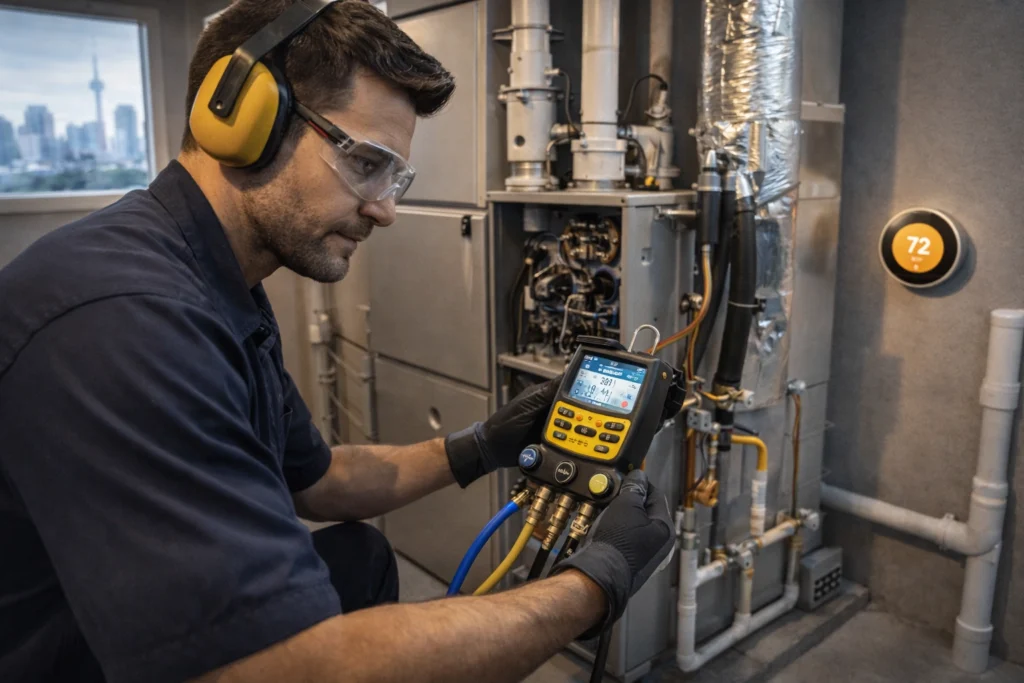
- Proper charging and leak checks protect your family’s safety and minimize running costs
If you’ve heard about the shift away from Freon, this is why: greener homes and cleaner air for your family.
Ductwork and Ventilation Vents
Ductwork is your HVAC’s vein system, moving treated air into every room and back again via:
- Supply vents: Deliver fresh, conditioned air
- Return vents: Pull used air back for re-heating/cooling
Well-sealed ducts can improve efficiency by over 20% and boost indoor air quality—especially important in busy, allergy-sensitive Toronto households.
Heat Exchanger: Safety and Efficiency
Your system’s heat exchanger ensures warm air gets distributed—without exposure to combustion gases.
What to watch for:
- Cracks or corrosion may lead to carbon monoxide leaks (always act immediately on detector alarms!)
- Annual inspections prevent hidden safety hazards and ensure efficient transfer of heat
Air Filter: First Line of Defense
A high-quality air filter traps dust, pollen, and airborne pollutants before they circulate.
Insider tips:
- Change every 60-90 days (or more often with pets/allergies)
- Upgrading to HEPA can improve air quality and help protect every part of your HVAC
Regular filter changes are the simplest way to keep your family breathing easy and prevent costly system backups.
No single part works alone in your HVAC system: every component supports day-to-day comfort, safety, and energy savings in your GTA home or business. An efficient, well-maintained system starts with understanding—and regularly caring for—these key pieces.
Additional HVAC System Enhancements
Modern HVAC systems do more than heat and cool—they’re your front line for comfort, health, and indoor air quality year-round in Toronto’s changing climate.
From winter dryness to summer humidity, supplementary components like humidifiers, dehumidifiers, and air cleaning devices can drastically improve how your home or business feels and performs.
Humidifiers and Dehumidifiers
Picture this: It’s February in North York and the air inside your home feels dry as chalk—dry air can cause itchy skin, static shocks, and even damage wood floors and furniture.
A whole-home humidifier adds moisture back into the air, making everything feel warmer and healthier.
On muggy August days in Oakville, a central dehumidifier helps:
- Prevent mold and mildew growth
- Protect electronics and building materials
- Support fresher, more comfortable indoor air, even as outdoor humidity soars
Adding these devices to your HVAC system keeps humidity levels between 30-50%, which is optimal for comfort and home preservation.
“Controlling humidity isn’t just about comfort—it’s key to protecting your investment and your health.”
Air Quality Improvement Devices
Toronto’s urban air can bring in unwanted guests—dust, pollen, bacteria, and traffic fumes.
Today’s HVAC enhancements offer real solutions, including:
- UV air purifiers: Use ultraviolet light to kill bacteria, viruses, and mold spores before they circulate
- High-efficiency filters (HEPA/MERV 13+): Trap up to 99.97% of airborne particles
- Electronic air cleaners: Electrically charge and capture fine dust, smoke, and allergens
- Activated carbon filters: Remove persistent odours and chemical vapours
Families with allergies or workplaces concerned about odours appreciate the fresh, hospital-quality air these devices create.
“A Toronto home with air purification can house a family, not a colony of allergens or germs.”
Seamless System Integration
Good news: Many enhancements can be added onto existing HVAC systems during routine upgrades or maintenance visits.
Toronto-area homeowners report that humidity and air quality upgrades lead to:
- Fewer musty odours
- Reduce allergy flare-ups
- Longer equipment life due to less dust and debris buildup
No two buildings are alike—consult a certified HVAC pro to find the right enhancements for your lifestyle or office.
Staying ahead of dryness, dampness, and airborne contaminants means a healthier, more valuable property—and a better day-to-day experience for everyone indoors.
How HVAC Parts Interact in Seasonal Cycles
In Greater Toronto homes and businesses, your HVAC system works like a well-coordinated team—each part stepping up as the seasons change.
Whether it’s a frigid January night or a muggy July afternoon, core components like the thermostat, furnace, blower, evaporator coil, and condenser all play unique roles to keep you comfortable.
HVAC cycles are seamless behind the scenes, but knowing how parts interact helps you spot issues before they lead to breakdowns or rising energy bills.
Step-by-Step: Heating Mode
Picture this on a frosty Toronto morning: you walk into the hallway and feel a perfect, even warmth.
Here’s how your system delivers that comfort:
- Thermostat detects your home is too cold and signals your furnace or heat pump to turn on.
- Furnace or heat pump generates heat.
- Heat exchanger safely transfers warmth to incoming air—never mixing exhaust with breathable air.
- Blower motor and fan circulate heated air through ductwork, delivering consistent warmth to every room.
- Air filter captures dust and debris, protecting your family and the system itself.
“A great furnace gets noticed on winter’s coldest days—reliable even heat is the sign of a system working together.”
Step-by-Step: Cooling Mode
Flip the switch on a sticky summer afternoon and instantly feel cool, dry air drift from the vents.
The cycle includes:
- Thermostat switches to cooling based on temperature setting.
- Evaporator coil (indoor) absorbs heat and humidity as warm air passes over it.
- Refrigerant carries heat outside through insulated lines.
- Compressor and condenser coil (outdoor unit) expel the heat outdoors, often releasing over 12,000 BTUs of heat per hour in average Toronto homes.
- Blower fan returns cooled, dehumidified air back inside.
“When humidity drops and your home feels fresh on a 30°C day, thank your condenser and evaporator working in sync.”
Step-by-Step: Ventilation Mode
Good air isn’t just about temperature—quality matters.
Here’s what happens:
- Air handler or dedicated ventilation unit pulls in fresh air, exhausting stale indoor air.
- Continuous filtration removes particles and allergens, supporting healthy indoor air.
- Energy Recovery Ventilators (ERV/HRV) exchange heat and moisture between outdoor and indoor air, reducing energy costs by up to 40% over traditional systems—crucial with Ontario’s energy rates.
- Ductwork evenly distributes fresh, filtered air, reaching every corner of your property.
“With energy recovery ventilators, families breathe easier—improving air quality without driving up energy bills.”
Each season, your HVAC system quietly adapts.
Knowing these steps helps you spot problems, explain issues to technicians, and make smart decisions about upgrades or maintenance—all crucial for GTA comfort and peace of mind.
Importance of Regular Maintenance: Protecting Key Parts
Staying ahead with regular HVAC maintenance is more than just a checklist—it’s the key to protecting your comfort, safety, and wallet. When every part of your system is well-cared-for, breakdowns become rare, efficiency soars, and surprise repair bills shrink.
A neglected filter or dusty coil may drag your system down by up to 15% in efficiency, according to industry studies. Think of it as your car needing an oil change—one small task makes everything else run better.
Essential HVAC Maintenance Tasks
To keep your system running at its best, these basic maintenance steps should never be skipped:
- Filter changes: Every 1-3 months, swap out your air filter to keep dust and pollutants from choking air flow and damaging parts.
- Coil cleaning: Remove buildup from your evaporator and condenser coils to prevent cooling losses and extend compressor life.
- Duct inspection and sealing: Check for leaks or blockages in your ductwork that could waste up to 30% of your home’s heated or cooled air.
- Refrigerant level checks: Ensure your refrigerant lines are topped up and leak-free for optimal temperature control.
Benefits That Go Beyond Comfort
A well-maintained HVAC setup delivers more than just relief from sticky summers or icy winters. Consider these measurable perks:
- Lower energy bills by up to 20%—less strain means less electricity and gas used.
- Longer equipment life—pro systems in Toronto with regular care often last 3-5 years longer.
- Fewer emergency breakdowns—avoid late-night surprises and costly repair calls with routine checkups.
“Picture this: You’re getting ready for a busy workday when you realize your home’s perfectly heated—while your neighbor is stuck waiting for an emergency technician.”
Why Pro Maintenance Helps in the GTA
Toronto’s climate extremes put HVAC systems to the test year-round. Professional maintenance programs from local experts like BobbyAir help you:
- Catch safety risks—like cracked heat exchangers before they cause carbon monoxide leaks.
- Access 24/7 emergency service and priority scheduling for peace of mind.
- Meet Ontario’s energy codes and qualify for local rebates thanks to documented upkeep.
Consistent, expert maintenance isn’t just about system health—it’s a long-term investment in energy savings, safety, and comfort for every Toronto home and business. Prioritizing seasonal tune-ups now helps guarantee reliable service, lower bills, and a stress-free experience when you need it most.
Unique Considerations for GTA Homes and Businesses
Toronto’s four-season climate isn’t just about long, cold winters—it’s about fast-changing weather, sticky summer humidity, and the “shoulder seasons” where comfort needs can shift in a week.
Spring and fall in the GTA can see temperature swings of 15°C in a single day, making flexible, responsive HVAC setups essential.
How GTA Weather Dictates HVAC Needs
- Winter: Investing in a high-efficiency furnace or heat pump is crucial for reliable warmth—especially as average January lows hit -6°C.
- Summer: Rising humidity means central air with dehumidification goes from luxury to necessity, with heat alerts and sticky nights now more common.
- Spring/Fall: Programmable thermostats and zoning are key—imagine leaving the house in jacket weather and returning to a heatwave.
“Picture this: one minute you need the heat, and by afternoon, you’re reaching for air conditioning. The right system keeps your home comfortable, no matter what Ontario throws your way.”
Retrofit Challenges in Older Toronto Homes
The GTA is full of character homes—think 1940s brick houses in East York or century-old Victorians in downtown neighborhoods.
Upgrading these properties often involves:
- Limited space for ductwork: Ductless heat pumps or slim-duct systems offer solutions without major renovations.
- Poor insulation and old windows: Upgrading insulation can reduce heat loss by up to 30%, directly lowering energy bills.
- Electrical limitations: Modern HVAC (like high-efficiency heat pumps) may require panel upgrades.
Quotable tip: “Old homes can get modern comfort—the right retrofit approach means safer, quieter, more even heating and cooling without gutting your walls.”
Sizing, Insulation & Energy Codes in the GTA
Choosing the right HVAC isn’t just about brand or cost.
- Proper sizing: An oversized furnace cycles on and off, wasting energy—a right-sized system runs efficiently and lasts longer.
- Insulation upgrades: Bring your home up to Ontario Building Code standards and see annual savings of 15-20%.
- Local codes and rebates: The City of Toronto and Ontario often offer incentives for ENERGY STAR® equipment—these can cover thousands in costs.
“Smart upgrades mean more than comfort—they’re a step toward real savings and peace of mind when the next cold snap or heat wave hits.”
No two GTA homes or businesses are exactly alike, so a tailored HVAC solution—considering age, layout, and climate—delivers the best comfort, value, and energy performance.
When to Replace or Upgrade Key HVAC Components
Knowing when to replace or upgrade your HVAC system isn’t just about comfort—it can mean lower bills, safer air, and fewer emergencies. In the GTA, a well-timed upgrade can also unlock government rebates and energy savings that put real money back in your pocket.
Spot the Signs: When Replacement Is Needed
If you notice any of these issues, it may be time to call in a pro:
- Rising energy bills despite similar use
- Uneven temperatures or cold/hot spots in your home
- Frequent need for repairs or noisy operation
- Furnace or A/C unit over 12-15 years old
- Yellow burner flames, odd smells, or moisture around vents (potential safety risks)
Small failures add up—don’t wait for a full breakdown during Toronto’s coldest week.
Evaluate Upgrade Timing: What Makes Sense
Choosing when to replace or upgrade is all about balancing cost, age, and performance. Picture this: you’ve spent $700 on repairs in the past year, and your unit is 15 years old with no Wi-Fi controls. Investing in new tech could mean:
- Variable-speed blowers that adapt for ideal comfort and save up to 30%* on energy
- High-efficiency heat pumps now qualifying for federal rebates—sometimes up to $5,000 for GTA homeowners
- Smart thermostats** that trim costs and fit into busy lives
*Source: Natural Resources Canada, 2023.
Unlock the Benefits: Modern Tech and Local Incentives
Toronto-area homes and businesses are eligible for:
- Enbridge Home Efficiency Rebate Plus: up to $10,000 off energy-saving upgrades
- Manufacturer and municipal programs for ductless heat pumps, eco-furnaces, or air quality upgrades
- Peace of mind: new systems come with warranties and higher safety ratings
Upgrading often pays for itself in lower bills, cleaner air, and fewer urgent calls—especially in high-demand seasons.
The smartest move? Watch for rising costs, listen to your HVAC, and ask a trusted local expert about your rebate and upgrade options. A proactive replacement means year-round comfort, fewer surprises, and extra cash saved for what matters most.
Quick Reference: Common HVAC Problems and Solutions by Component
If your HVAC system suddenly stops working on a hot July afternoon or a freezing Toronto night, you don’t want to guess what’s wrong.
This quick guide lists the most common problems for each key HVAC part—plus when you can try a quick fix versus when to call BobbyAir for 24/7 emergency repair.
Typical Issues by HVAC Component
- Thermostat
- Unresponsive or blank screen
- Doesn’t follow programmed settings
- Quick tip: Check/change batteries, verify circuit breaker
- Furnace/Heat Source
- No heat, strange noises, frequent cycling
- Pilot light out (gas units), burner fails to ignite
- Quick tip: Inspect for tripped breaker or blown fuse; check thermostat
- Air Handler/Blower Fan
- Air isn’t circulating, weak or no airflow
- Odd vibrations or loud operation
- Quick tip: Ensure all vents are open and not blocked by furniture
- Evaporator Coil
- Ice buildup on coil, musty smell from vents
- Reduced cooling or higher humidity
- Quick tip: Replace air filter and ensure nothing is blocking return air grilles
- Condenser Unit/Compressor
- Outdoor unit won’t turn on
- Strange buzzing sounds, visible debris
- Quick tip: Clear leaves and dirt around unit, confirm outdoor disconnect is on
When to DIY vs. Call for Emergency Service
- Try DIY if:
- System won’t turn on—reset circuit breaker, check thermostat batteries, replace filter
- Airflow is weak—check and open all supply/return grilles, confirm no visible blockages
- Thermostat issues—test programming, clean the unit face gently
- Call 24/7 Professional Help if:
- No heat during a cold snap (potential safety hazard)
- Refrigerant leaks or system is blowing warm air during summer
- Burning smell, repeated tripped breakers, or carbon monoxide alarm sounds
- Water pooling by indoor or outdoor unit, persistent strange sounds
Picture this: You come home to a cold house in January. The furnace won’t ignite and the kids start piling on blankets. That’s the moment to call BobbyAir’s emergency hotline—fast, professional service is just minutes away.
Fast Action Minimizes Discomfort and Risk
A small issue can quickly escalate into costly breakdowns, higher energy bills, or even safety emergencies.
“Change your air filter every 1-3 months and keep vents clear—it’s a simple way to prevent the most common HVAC headaches.”
Knowing when to act and who to call means faster comfort, safer air, and peace of mind for Toronto-area homes and businesses.
Conclusion
A well-designed HVAC system is more than just the sum of its parts—it’s your daily guarantee of comfort, health, and energy savings, built to handle the unique demands of GTA living.
Every component, from your thermostat to your air filter, plays a direct role in your home’s safety and efficiency. By taking simple, proactive steps, you can protect your investment and enjoy a healthier, more comfortable space all year long.
—
Key Takeaways:
- Replace your air filter every 1–3 months to keep air quality high and your system running smoothly.
- Schedule annual professional maintenance to boost efficiency, catch problems early, and extend equipment life.
- Upgrade to a smart thermostat for real-time control, lower bills, and added convenience, especially with busy GTA schedules.
- Listen for unusual noises or uneven temperatures—act quickly to prevent small issues from becoming major headaches.
- Consider adding air quality devices or humidity control for extra comfort and protection in Toronto’s changing climate.
—
Ready to take charge of your home’s comfort?
- Check your filter and thermostat settings today
- Book a professional HVAC tune-up this season
- Ask about local rebate programs for system upgrades
- Call for expert help at the first sign of uneven comfort or strange sounds
—
Toronto weather won’t wait—and neither should your comfort. A trusted HVAC partner turns every season into an opportunity for better air, smarter savings, and peace of mind.
“Your comfort is built on the small choices you make today—choose reliability, and every day will feel just right.”
According to Natural Resources Canada, proper HVAC maintenance can reduce household energy use by up to 20%.
FAQs
Q1. What does an HVAC system include in most Toronto homes?
An HVAC system includes a thermostat, furnace or heat pump, air handler, evaporator and condenser coils, ductwork, vents, and air filters working together to regulate temperature and air quality.
Q2. Does what an HVAC system includes change for older GTA homes?
Yes. Older Toronto homes may use ductless systems, boilers, or upgraded air handlers to adapt to space and insulation limitations.
For a deeper explanation of how each component works together and how HVAC upgrades can boost comfort and efficiency across Toronto, explore our full guide on Understanding HVAC Systems—your go-to resource for smarter heating, cooling, and indoor air quality decisions.