
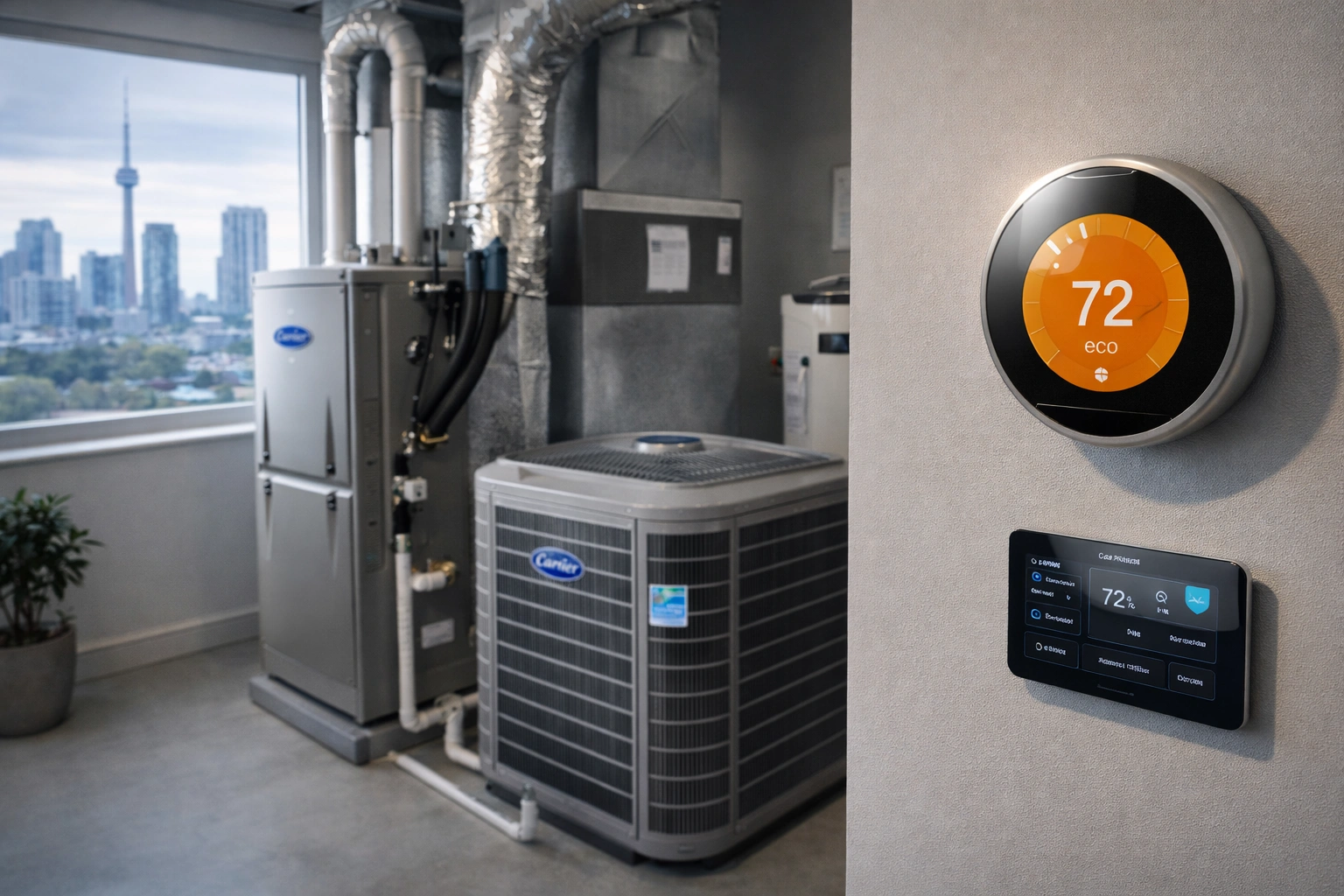
Understanding HVAC Systems is essential for achieving lasting comfort, lower energy bills, and healthier indoor air—especially for Toronto-area homeowners and property managers. By knowing your system options, core components, and modern technologies, you can confidently choose, upgrade, and maintain an HVAC solution that performs reliably in the GTA’s extreme climate.
- Know your HVAC system type to maximize comfort and efficiency—split systems, heat pumps, hybrids, mini-splits, and packaged units each suit different property needs and climate challenges in the GTA.
- Prioritize professional installation and regular maintenance for peak reliability—annual tune-ups and prompt filter changes can reduce energy use by up to 15% and add years to your system’s lifespan.
- Upgrade to energy-efficient solutions like smart thermostats, variable-speed compressors, and ENERGY STAR® systems for 15–47% lower utility bills and eligible rebates up to $7,500 in Ontario.
- Address sudden breakdowns and costly repairs proactively—use the $5,000 Rule (system age × repair cost); replace if the total exceeds $5,000 for reliable, future-proof operation.
- Protect your indoor air quality by investing in premium filtration, humidity control, and ventilation; clean filters and modern purification keep your home and office air healthier year-round.
- Leverage innovative HVAC technology—AI-driven controls, real-time air monitoring, and predictive service alerts mean fewer surprises and more control at your fingertips.
- Rely on trusted, local expertise who offer 24/7 emergency support, transparent pricing, and warranties to guarantee comfort even during Ontario’s toughest weather.
Ready to take control of your comfort and savings? Dive into the full guide for practical advice, upgrade strategies, and expert HVAC tips tailored for the Greater Toronto Area.
Introduction
Ever tried to enjoy a hot shower on a freezing January morning—only to discover chilly, sluggish heat? Or felt blindsided by a sudden spike in your energy bill after an unpredictable Toronto heatwave? A reliable HVAC system stands between you and these daily frustrations, quietly working behind the scenes to maintain comfort, air quality, and peace of mind.
If you’re a homeowner, property manager, or business owner across the GTA, you know that choosing the right heating and cooling solution isn’t just about comfort—it’s an investment in safety, savings, and property value. Yet, with so many options and evolving technologies, sorting through furnace types, heat pumps, ductless systems, and smart controls can feel overwhelming.
That’s why understanding the key types, components, and innovations in HVAC isn’t just for the experts. Making informed choices now means:
- Protecting your family’s or tenants’ comfort, no matter how wild Ontario’s weather gets
- Reducing annual energy costs by up to 47% with modern, efficient equipment
- Minimizing emergency repairs and unexpected expenses through professional insight and proactive care
Today’s smart HVAC upgrades are more than luxury add-ons. Features like Wi-Fi thermostats, enhanced filtration, and fast-acting zoned climate control are rapidly becoming essentials as Toronto’s climate grows more extreme—and energy prices keep climbing.
So, what actually sets apart each HVAC system? How do the inner parts work together to deliver reliable comfort and efficiency, year after year? And which new technologies deserve your attention (and investment) as you plan your next home or business upgrade?
You’re about to explore the answers—tailored for busy GTA families, professionals, and property owners who value real solutions. Up next: the foundational concepts that every local should know about how their HVAC system impacts daily life and long-term savings.
What Is an HVAC System? Core Concepts and Why They Matter
Heating, Ventilation, and Air Conditioning—HVAC for short—is the system that keeps your home or business comfortable all year in Toronto’s unpredictable climate.
Imagine walking into a cozy living room during a February snowstorm, or a cool, filtered office on a steamy July day. That’s the invisible magic of a well-tuned HVAC system at work.
Why HVAC Matters for Comfort, Safety, and Wellbeing
An HVAC system does much more than just control temperature:
- Heating: Delivers warmth in winter with a furnace, heat pump, or boiler.
- Cooling: Keeps interiors cool and dry using air conditioning or heat pumps.
- Ventilation: Continuously circulates and filters air, removing allergens, dust, and impurities.
- Humidity Control: Balances moisture levels to protect both your health and your property.
For GTA homes and businesses, indoor air quality and comfort aren’t just luxuries—they’re essentials.
The Value of Reliability, Efficiency, and Professional Expertise
One thing busy GTA families and property owners agree on: Dependable HVAC systems keep life running smoothly.
Picture this: It’s -15°C, your furnace won’t start, and energy bills are climbing. This is where reliability and expert response matter most.
The top pain points for Toronto-area property owners include:
- Sudden system failures or breakdowns—especially during extreme weather.
- High or rising utility costs due to outdated or inefficient equipment.
- The need for fast emergency service and professional advice.
A professionally installed, energy-efficient system can cut annual energy costs by 15% or more, according to recent industry data.
Where You’ll Find HVAC Systems in the GTA
HVAC technology serves a wide range of properties:
- Single-family homes: Most common for central heating and cooling.
- Condos and apartments: Often use ductless or packaged units to save space.
- Commercial spaces: Require scalable, robust systems tailored to building size and business needs.
A healthy, modern HVAC setup does more than control climate—it protects your investment and your peace of mind. When it comes to indoor comfort and air quality, professional installation and maintenance aren’t extras—they’re essentials that pay for themselves in reliability and lower costs.
Main Types of HVAC Systems: Functions, Benefits, and Best Uses
Choosing the right HVAC system for a Toronto-area property starts with understanding the five most common residential options—each with distinct benefits for the GTA’s diverse climate.
Picture this: a cozy North York winter evening, family gathered indoors, warm air circulating thanks to a well-chosen HVAC system.
Homeowners and businesses in the region typically select from:
- Furnace & Air Conditioner (Split System)
- Heat Pumps (Air-Source & Geothermal)
- Hybrid/Dual-Fuel Systems
- Ductless Mini-Split Systems
- Packaged HVAC Systems (great for tight spaces)
These choices are driven by comfort goals, property size, and energy efficiency priorities.
—
Furnace & Air Conditioner (Split System)
Pairing a gas/electric furnace with a central AC, this system uses ducts to deliver even heating and cooling.
- Best for larger homes and families needing reliable winter warmth
- Handles sudden Ontario cold snaps with steady performance
- Typical lifespan: 15–20 years with regular maintenance
Fact: Split systems are still Toronto’s most common solution for busy households seeking tried-and-tested comfort.
—
Heat Pumps (Air-Source & Geothermal)
Heat pumps both heat and cool by transferring heat between inside and outside.
- Air-source units are ideal for moderate GTA winters, using up to 50% less electricity than baseboard heating
- Geothermal options tap into steady underground temperatures, offering the highest efficiency but with a higher upfront cost (installations start around $25,000)
Imagine: energy bills that are up to 40% lower, plus a reduced carbon footprint—especially for eco-conscious homeowners.
—
Hybrid/Dual-Fuel Systems
Hybrid systems combine a heat pump and furnace, switching between them automatically for optimal efficiency.
- Great for families balancing comfort with cost savings
- Delivers low-energy heating most of the year, with furnace backup for -20°C stretches
- Provides future-proof flexibility for unpredictable weather
Hybrid means never choosing between savings and comfort.
—
Ductless Mini-Split Systems
These systems use small indoor units connected to an outdoor compressor—no ducts required.
- Perfect for additions, retrofits, or homes with no central air
- Offers room-by-room temperature control for personalized comfort
- Installs quickly, minimizing disruption—ideal for older Toronto properties
See our Mini-Split Guide for in-depth details on zoned climate control.
—
Packaged HVAC Systems
All major components are housed in a single outdoor unit, making this a smart solution where indoor space is limited.
- Suits bungalows, condos, and small businesses with rooftop installations
- Easy access for servicing, though sometimes less efficient in very cold weather
A packaged system maximizes space without sacrificing essential comfort.
—
It’s essential to match your HVAC system type to your property’s design, energy priorities, and the demands of Ontario’s climate. Work with a trusted Toronto expert to unlock long-term comfort, savings, and reliability tailored for your home or business.
Key Components of Modern HVAC Systems: Functions and Interactions
Understanding how the main parts of an HVAC system work together gives you a stronger sense of comfort—and control—over your home climate. A well-tuned system keeps air fresh, temperatures steady, and energy bills in check across every Toronto season.
Thermostat and Smart Controls
The thermostat is the brain of your HVAC system. It senses temperature and tells your heating or cooling when to start and stop.
- Basic thermostats: Manual temperature adjustment; older but still common.
- Smart thermostats: Use Wi-Fi and smartphones for remote control; some use AI to learn your routine and slash energy use by up to 47%.
- Picture this: You lower the heat from your phone while stuck on the subway—your home stays efficient even when life gets busy.
Watch for:
- Unresponsive thermostats
- Big swings in home temperature
Air Handling Components
Three core parts move heat and cool air:
- Compressor: Pumps refrigerant to move heat—in or out.
- Evaporator coil: Absorbs indoor heat during summer or releases it in winter.
- Condenser coil: Sends unwanted heat outside in summer, or pulls it in to warm your home.
- Air handler/fan: Circulates air for even comfort and cleaner air.
- Expansion valve and refrigerant lines: The “arteries” that move and regulate refrigerant flow.
Signs of trouble:
- Uneven room temperatures
- Icy coils or hissing noises
Distribution Network: Ductwork, Vents & Filtration
Airflow is everything for comfort and health:
- Ducted systems: Push air through hidden passages in walls and ceilings.
- Ductless (mini-splits): Send air directly into rooms—no ductwork required.
- Filters: Trap dust, pollen, and allergens; a clogged filter boosts energy use by up to 15%.
Tip: If rooms get stuffy or dusty fast, change filters every 1-3 months.
Furnaces and Heat Exchangers
The heat exchanger sits at the heart of gas or electric furnaces:
- It safely moves heat to your air without mixing gases.
- Includes safety sensors to shut down if anything goes wrong.
Watch for:
- Rust, cracks, or odd smells—these may signal a safety risk or pending breakdown.
System Integration
In modern systems, each part “talks” to the others:
- Hybrid setups use both a furnace and a heat pump, switching automatically for best efficiency.
- Professional installation ensures every component runs smoothly, safely, and up to code.
“Every piece—from thermostat to filter—plays a role in your comfort and energy savings.” Imagine a tight crew, each member doing their job so your family stays warm, cool, and secure. Regular maintenance is non-negotiable for reliability.
When each HVAC part pulls its weight, you get dependable performance and peace of mind. Spotting changes in air quality, sounds, or temperature is your cue to call a pro—prompt action keeps your system efficient, safe, and Toronto-winter ready.
Energy Efficiency and HVAC: Essential Strategies for Savings
Energy efficiency isn’t just a buzzword for GTA homeowners—it’s a practical strategy to fight mounting energy costs and meet new Ontario regulations. The right HVAC system can trim annual bills by 15-47%, making a direct impact on your wallet and the environment.
Efficient systems aren’t one-size-fits-all. Different HVAC types balance upfront costs, operational efficiency, and ongoing savings:
- Heat pumps (including air-source, geothermal, and dual-fuel) deliver the highest efficiency, especially in moderate Toronto climates.
- Ductless mini-splits and VRF systems eliminate duct losses, saving up to 40% over traditional forced-air systems.
- Furnace & AC (split systems) remain popular but may cost more to operate if not ENERGY STAR® certified or properly sized.
If you’ve ever wondered why your bills spike in winter, the reason may be poor system sizing, lack of professional installation, or outdated equipment.
Modern Features for Cost and Energy Reduction
Smart upgrades now drive major savings:
- Variable-speed compressors and inverter technology cut energy use by up to 42% by matching output to demand.
- Smart thermostats with AI learn your patterns, providing up to 25% lower utility bills and even remote access—making it simple to save whether you’re at work or on vacation.
- Zoned systems let you heat or cool only occupied areas, maximizing comfort and efficiency.
Think of a system that adjusts itself as outdoor temps shift—always comfortable, never wasting a cent.
Professional maintenance holds these savings. Simple actions like changing filters and inspecting coils can stretch a system’s life by 3-5 years and prevent costly breakdowns.
Cost Considerations and the $5000 Rule
Deciding whether to repair or replace? The $5000 Rule helps:
- Multiply your system’s age by the repair cost—if the total exceeds $5,000, replacement usually makes more sense, offering better efficiency and fewer surprises.
- Typical repair costs in the GTA: $300-$900 for minor issues, $2,000+ for compressors or heat exchangers.
- Full system replacements: Usually range from $4,000 to $12,000 (before rebates), depending on type and home size.
Budgeting now means less stress later. For specific strategies and a detailed checklist, see our Advanced HVAC Savings Guide.
The highest-impact upgrade is rarely just the cheapest—choose a system that matches your home and lifestyle for years of worry-free comfort and savings.

Innovations and Next-Gen HVAC Technologies: The 2025 Outlook
When it comes to staying comfortable and cutting costs in the GTA, the future of HVAC is smarter, cleaner, and more efficient than ever before. Picture this: your thermostat not only keeps you cozy but learns your schedule, predicts temperature spikes, and helps you save up to 47% on your energy bills, all while you control it from your phone.
Smart HVAC and Connected Home Integration
AI-driven smart thermostats are making homes truly intelligent.
- Remote access lets you adjust settings from anywhere, whether you’re downtown for work or on vacation.
- Predictive controls automatically optimize heating and cooling, responding to weather shifts and your daily routines.
- Recent data shows households adopting these systems report annual savings of $300 to $500.
A simple tap on your phone could mean walking into the perfect temperature—no effort required.
Advanced Air Quality and Filtration Systems
Cutting-edge filtration is a game changer for families and businesses prioritizing wellness.
- New filters use nanofiber layers and even sound waves to catch particles as small as 0.1 microns.
- Real-time air quality sensors adjust system output instantly, perfect for allergy and asthma sufferers.
For busy Toronto families or offices, clean air has never been easier—or more automatic.
Sustainable and Eco-Friendly HVAC Solutions
GTA homeowners are turning to green tech not just for the environment, but for their wallets.
- Low-GWP refrigerants and high-efficiency heat pumps are replacing older models, slashing both emissions and costs.
- Look for geothermal and solar-integrated systems—now eligible for new Ontario rebates in 2025.
- These eco-upgrades can lower monthly utility bills by 15-42%.
Predictive Maintenance and IoT Enabled Service
Imagine a friendly alert on your phone before anything breaks down.
- IoT sensors track system performance in real time, catching up to 92% of issues before failure.
- Proactive repairs reduce emergency calls and keep comfort uninterrupted.
Across Toronto, property managers are seeing fewer surprise outages and longer system lifespan.
Smart, connected, and eco-forward—today’s HVAC upgrades don’t just keep you comfortable; they put you in control, protect your budget, and help you breathe easier, one day at a time.
HVAC System Lifespan, Repairs, and Service: Protecting Your Investment
An HVAC system is an investment you rely on 24/7—from blistering Toronto summers to frigid North York winters.
If you want your system to last, knowing what impacts HVAC lifespan is essential.
Most central HVAC systems last 12-20 years in the GTA, but that can shrink or grow depending on:
- System Type: Heat pumps and furnaces often outlast standard AC units; geothermal systems can reach 25+ years.
- Maintenance Frequency: Annual or semi-annual service keeps systems efficient, lowers repair frequency, and extends life.
- Usage Patterns: Heavy use—like running the AC constantly in a humid Oakville summer—speeds up wear.
“Routine HVAC care is the best way to add years to your system and dollars to your wallet.”
Service Intervals and What Professional Maintenance Includes
HVAC experts recommend at least one comprehensive tune-up per year—ideally before each heating and cooling season.
Professional maintenance should always include:
- Full system inspection and safety checks
- Clearing drains, checking electrical
- Cleaning or replacing filters (dirty filters can spike energy use by 15%)
- Testing thermostat, refrigerant, and controls
- Lubricating moving components and checking airflow
- Reviewing system efficiency and looking for early warning signs
“Think of annual tune-ups like ‘oil changes’ for your HVAC—a small step that prevents expensive breakdowns.”
Common Repairs, High-Cost Parts, and How to Plan
Picture this: The AC stops during a heatwave or furnace goes silent on a winter morning—repairs rarely wait for a convenient moment.
Common high-ticket repairs in the GTA include:
- Compressors (up to $2,000)
- Heat exchangers and coils ($800–$2,500+)
- Blower motors and circuit boards ($400–$1,200+)
To avoid surprise bills:
- Budget for unexpected repairs—roughly $300–$700 annually is realistic for aging systems.
- Know the “$5,000 Rule”: If repair cost × system age > $5,000, replacement often makes more sense (see our Most Expensive Parts page for details).
- Protect your investment with manufacturer and labor warranties—some cover major parts for up to 10 years.
“Certified technicians offer more than repairs—they’re peace of mind, right here in Toronto.”
Why Trusted Technicians and Warranties Matter
Using a licensed Toronto HVAC team means:
- Code-compliant repairs that protect your warranty
- 24/7 emergency response for those bitter January nights
- Honest recommendations and transparent pricing
Service plans and warranties are your safety net, guaranteeing repairs are quick, professional, and low stress.
—
Smart GTA homeowners and property managers know: proactive service keeps HVAC systems healthy, efficient, and reliable year after year. Schedule regular tune-ups, plan for repairs, and choose trusted pros for every job—your comfort depends on it.
HVAC Systems and Indoor Air Quality: Safeguarding Health and Comfort
Indoor air quality is more than a comfort issue—it’s a health essential for every home and business in the GTA. Your HVAC system plays a central role in either improving or degrading the air you breathe every day.
A well-maintained HVAC system filters out dust, allergens, and indoor pollutants, keeping your environment safer for families, kids, and staff.
Why Ventilation, Filtration, and Humidity Matter
Modern HVAC systems do three jobs at once:
- Ventilation: Removes stale indoor air and brings in fresh outdoor air, reducing buildup of VOCs and airborne bacteria.
- Filtration: Captures pollen, dust, and microscopic irritants. Clean filters are critical for allergy relief—dirty ones can actually circulate pollutants.
- Humidity Control: Stabilizes moisture to help prevent mold, dry skin, and static shocks—major issues in Ontario’s fluctuating climate.
Pro tip: Dirty or clogged filters can reduce system efficiency by up to 15% and actually worsen air quality.
Health-Focused Upgrades Gaining Traction
Picture this: A busy North York family breathes cleaner, healthier air every day, thanks to smart upgrades installed by a local technician.
The latest trends for GTA homeowners and businesses include:
- HEPA filters: Trap 99.97% of fine particles down to 0.3 microns—ideal for sensitive households and medical offices.
- UV-C light systems: Kill airborne viruses, bacteria, and mold spores within your HVAC ducts, providing continuously fresher air.
- Advanced air purification add-ons: Combine filtration, UV-C, and ionization for hospital-grade air quality at home.
“Today’s HVAC technology isn’t just for comfort—it’s your home’s best defense against allergens and airborne germs.”
Year-Round Best Practices for Air Quality
Stay ahead of indoor air issues by adopting four key habits:
- Change filters every 1-3 months to avoid airflow blockages and efficiency loss.
- Schedule annual HVAC maintenance with certified technicians to ensure thorough cleaning and calibration.
- Monitor humidity using smart controls, aiming for 35-50% year-round.
- Upgrade to air quality enhancements that match your family or office needs. (Learn more in our Air Quality Upgrades Guide.)
“An HVAC system that ignores air quality is only doing half the job.”
Investing in proactive ventilation, premium filtration, and humidity control keeps your indoor air healthy, reduces allergy symptoms, and ensures year-round comfort. These upgrades aren’t just a luxury—they’re your first line of defense for clean living in the GTA.
Choosing and Upgrading Your HVAC System: Decision Factors for GTA Homeowners
Choosing the right HVAC system means balancing climate, efficiency, and long-term value—especially in the unpredictable GTA weather.
Picture this: You want to stay cozy during a February cold snap or keep a growing family cool on a muggy August night. Your system has to be ready for anything Toronto’s climate throws at it, all while controlling energy bills.
Core Factors: What Matters Most
Smart homeowners and property managers focus on:
- Climate Suitability: Will your system handle -20°C winters and humid summers?
- Energy Efficiency: Look for ENERGY STAR® ratings and advanced tech for up to 47% energy savings with features like smart thermostats and variable-speed compressors.
- Lifecycle Cost: Upfront price is just the start. Factor in annual operating costs, maintenance, and longevity—modern heat pumps can last 15-20 years with the right care.
- Property Constraints: Space limitations? Consider ductless mini-splits or packaged systems for tight city lots or retrofits.
“Every property is unique—custom solutions create comfort and real savings.”
Why Professional Assessment Pays Off
DIY isn’t the answer when it comes to HVAC. A qualified GTA specialist will:
- Size your system accurately—oversized or undersized systems waste energy and money
- Recommend options based on your space, insulation, and air quality needs
- Identify opportunities for upgrades like air purification or smart controls
One miscalculation can cost homeowners $1,000+ per year in wasted energy and repairs.
Real-life scenario: Your neighbor upgrades to a heat pump and gets $7,500 in rebates—while you spend more just trying to keep an old furnace running.
Maximizing Incentives and Financial Flexibility
Ontario’s 2025 HVAC incentives help make high-efficiency systems affordable. Ask about:
- Rebates: Up to $7,500 for heat pumps and energy-efficient upgrades
- Financing: Flexible plans let you upgrade now, pay later
- Tax Credits: Offset costs with available municipal and federal breaks
“Take advantage of rebates so efficiency pays off from day one.”
Rely on Local Expertise
Trust matters. Work with a Toronto-based team that:
- Offers transparent, up-front estimates
- Delivers 24/7 emergency support
- Stands behind every installation with a warranty
A dependable local partner means comfort, confidence, and long-term savings.
If you want the highest comfort for your dollar, invest in an HVAC system that fits your home and climate—with guidance from professionals who live and work where you do.
Conclusion
Creating year-round comfort and healthier air in your Toronto home or business starts with the right HVAC system, tuned for this region’s unique climate. Reliable technology, professional installation, and intelligent upgrades are your strongest allies against sudden breakdowns and high energy bills.
You have more control than ever—smart choices today can lead to lower costs, cleaner air, and lasting peace of mind.
—
Key Takeaways for GTA Homeowners and Property Managers:
- Prioritize professional installation and routine maintenance to extend system life and prevent unexpected failures.
- Upgrade to energy-efficient systems and smart thermostats—these pay off fast in comfort, savings, and environmental impact.
- Watch your indoor air quality by changing filters, scheduling tune-ups, and adding advanced filtration as needed.
- Leverage local expertise and transparent service for fast help, quality work, and support in emergencies.
- Maximize available rebates and financing to make high-performance upgrades affordable today—not someday.
—
Next Steps You Can Take Right Now:
- Schedule a free HVAC assessment with a certified Toronto-area technician to pinpoint the best options for your space.
- Check eligibility for 2025 rebates and financing—these programs can save you thousands on upgrades.
- Book your next maintenance appointment to make sure your system is ready for the season ahead.
- Connect with a reputable local team for honest answers and fast emergency service—comfort shouldn’t wait.
—
Staying comfortable in Toronto’s hot summers and icy winters isn’t just about technology—it’s about making empowered choices for your property, your family, and your future.
Invest in expertise and modern systems today, and transform every season into your most comfortable yet. The peace of mind you gain is the real upgrade.
“The best time to secure your comfort is now—because in Toronto, the weather won’t wait.”
Learn more about our certified technicians, service standards, and commitment to Toronto homeowners on our About page.
FAQs
FAQ 1: How do HVAC systems improve energy efficiency in Toronto homes?
Understanding HVAC systems helps homeowners choose energy-efficient options like heat pumps, smart thermostats, and variable-speed compressors that reduce energy use by up to 47%. For energy ratings and standards, refer to ENERGY STAR® Canada:
https://www.energystar.gov/
FAQ 2: How often should an HVAC system be serviced?
Most HVAC systems should be professionally serviced at least once per year.
FAQ 3: Are smart thermostats worth it for HVAC systems?
Yes. Smart thermostats optimize heating and cooling automatically and can significantly reduce utility bills.
FAQ 4: What HVAC system is best for cold Canadian winters?
Heat pumps with cold-climate technology or hybrid HVAC systems perform best in Canadian winters.