
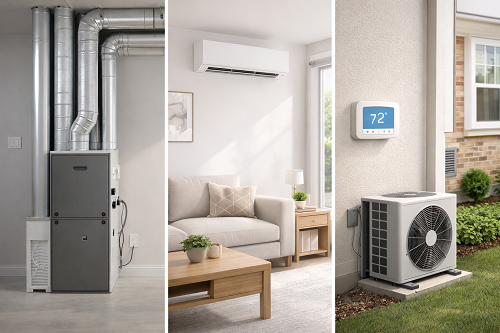
Types of HVAC systems play a critical role in comfort, energy efficiency, and long-term savings—especially in Toronto’s demanding climate and wide range of property types.
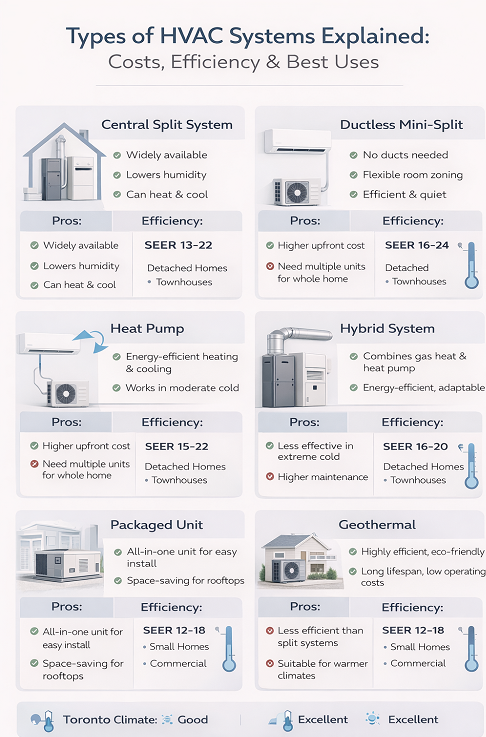
- Central (split) systems provide steady comfort and improved air filtration for homes with existing ductwork, offering cost-effective operation for larger properties over 2,000 sq ft.
- Ductless mini-split systems deliver up to 30% energy savings and zone-by-zone comfort, making them perfect for older homes, additions, condos, or any property without existing ducts.
- Modern heat pumps and hybrid systems maximize efficiency, with cold-climate models handling GTA winters and hybrids offering up to 50% heating energy savings by switching between gas and electric as needed.
- Packaged units fit tight spaces and small businesses, consolidating heating and cooling in one outdoor cabinet, but require more frequent maintenance due to weather exposure.
- Geothermal systems provide the ultimate long-term savings, cutting annual energy costs by up to 70% and lasting 25+ years, though they require higher upfront investment and ample outdoor space.
- Energy efficiency pays off fast— air-source heat pumps and mini-splits can lower bills by $500–$1,000 per year, while government rebates (like the Canada Greener Homes Grant) make upgrades more affordable.
- Local expertise matters— choosing a licensed, responsive GTA HVAC partner ensures reliable 24/7 service, transparent pricing, and installations that protect your comfort and investment.
- Smart controls and regular maintenance extend system life, save an extra 10% on energy bills, and prevent costly breakdowns—think annual tune-ups and monthly filter changes for peak performance.
Explore the full article for more detailed comparisons, cost breakdowns, and real-world examples to help you find the HVAC solution that’s right for your Toronto-area home or business.
Introduction
Imagine your home’s heat cutting out during a frigid January night, or your office cooling system sputtering out just as the summer humidity hits a peak—HVAC failures rarely arrive at a convenient time.
But replacing or upgrading your system is more than just a quick fix.
In the Greater Toronto Area, where energy bills can spike by 30% during extreme weather and older homes, condos, and businesses each bring their own unique quirks, choosing the right HVAC system is a crucial investment in both comfort and reliability.
Whether you’re a North York family managing a hectic household or a downtown business owner aiming to keep colleagues productive, the options might seem overwhelming—central air, mini-splits, heat pumps, hybrids, the list goes on.
So, how do you find a system that fits your space, efficiency goals, and budget, while still keeping every room comfortable year-round?
The good news: today’s HVAC solutions are smarter and more efficient than ever.
With the GTA’s unstable weather, homeowners and property managers are asking tougher questions than ever before:
- Which systems actually deliver reliable heat in -25°C winters?
- How much will you save by switching to modern, energy-efficient equipment?
- What hidden installation costs or maintenance hurdles should you expect?
- Who can you trust for fast, expert service when emergencies strike?
This guide is designed for you, the Toronto-area homeowner or manager who wants honest, authoritative answers—without the unnecessary jargon.
Here, you’ll discover:
- A clear breakdown of the six main HVAC system types used across Toronto homes and businesses—with their real pros, cons, and best-fit scenarios
- Straightforward comparisons to help you avoid common pitfalls and spot money-saving opportunities
- Genuine examples from families and businesses in the GTA who’ve tackled these challenges firsthand
By the end, you’ll have the insight to make a confident choice—one that balances comfort, budget, and peace of mind, no matter what the local weather throws at you.
Ready to find out which HVAC system matches your space and priorities best? Start by getting familiar with the most common types and how they compare across the GTA.
Overview of HVAC System Types
Choosing the right HVAC system can mean the difference between a comfortable, efficient home and ongoing headaches with temperature swings or rising energy bills.
Toronto’s unique mix of older homes, modern condos, and unpredictable winters calls for solutions tailored to each property. There are six main HVAC system types you’ll encounter in the GTA, each offering different benefits for comfort, cost savings, and reliability.
Picture this: A North York family needs consistent warmth for a two-storey home, while a downtown office wants quiet cooling without big renovations. Your needs and layout should always guide your choice.
Central (Split) Systems
Central systems are the “classic” approach—think an indoor furnace or air handler paired with an outdoor AC or heat pump, all connected by large ductwork.
- Ideal for: Larger homes (over 2,000 sq ft) with existing ducts
- Benefits: Even whole-home temperature, better air filtration for allergy control, and cost-effective operation if ducts are already in place
- Watch for: In older homes without existing ducts, installation can be disruptive and costly
“Central systems deliver steady comfort and clean air, but depend on good ductwork to avoid wasted energy.”
Ductless Mini-Split Systems
No ducts? No problem. Ductless mini-splits use an outdoor condenser and compact air handlers indoors, mounted high on walls or ceilings.
- Perfect for: Older homes, room additions, condos, or small offices
- Advantages: Zoned comfort by room, 20–30% higher energy efficiency than ducted systems, easy installs with minimal wall disruption
- Consider: Indoor units are visible, and heating capacity dips in the coldest months
Ductless mini-splits offer custom comfort in spaces where traditional ducts simply won’t fit.
Heat Pump Systems
Heat pumps are today’s efficiency stars, using electricity to move heat rather than generate it. Options include air-source (pulling heat from outdoor air) and geothermal (utilizing stable underground temperatures).
- Great for: Eco-focused homeowners and those wanting year-round heating and cooling
- Trends: Popularity is surging—new cold-climate models can now handle GTA winters down to -25°C
- Cons: Performance drops in extreme cold unless paired with backup heat
“A modern heat pump can heat and cool your home for just a third of the cost of traditional systems.”
Hybrid (Dual-Fuel) Systems
A hybrid system combines a heat pump with a high-efficiency gas furnace, automatically switching modes for maximum savings and comfort as the weather changes.
- Best for: Toronto’s unpredictable winters and properties with gas lines
- Strengths: Up to 50% heating energy savings, reliable performance in both mild and frigid weather, and smart controls that optimize for utility rates
This is smart technology at work—always choosing the most cost-effective and comfortable option.
Packaged Systems
All-in-one performance: Packaged units tuck heating and cooling into one outdoor cabinet, freeing up basement or utility space.
- Use cases: Homes with little indoor space, rooftops on small commercial properties, or spots with no basement/utility closet
- Pros: Compact design, quieter operation indoors
- Tradeoffs: More weather exposure means more frequent maintenance and shorter lifecycle in harsh climates
If space is tight, packaged systems keep things simple and efficient.
Geothermal Heat Pump Systems
Geothermal taps the constant temperature below ground to provide ultra-efficient heating and cooling via underground loops.
- For: Homeowners seeking the ultimate in long-term savings and environmental impact
- Perks: Lowest running costs, 25+ year lifespan, major rebates often available
- Challenges: High upfront investment, yard space needed for installation, and specialist installation required
Geothermal is the gold standard for eco-friendly living—if the site and budget fit.
Selecting the best HVAC system isn’t just about technology—it’s about finding the right fit for your lifestyle, property, and Toronto’s climate. Smart system selection can help you stay comfortable, save on monthly bills, and avoid costly breakdowns year after year.
Comparative Analysis: Pros, Cons, and Real-World Examples
Choosing the right HVAC system can mean the difference between year-round comfort and constant frustration—especially across the unique homes and weather swings of the Greater Toronto Area.
Here’s a direct comparison to help you decide with confidence:
—
At-a-Glance: System Strengths & Real Examples
Picture this: a North York family in a classic detached home upgrades their aging central air system; meanwhile, a newer downtown condo owner opts for a quiet ductless mini-split for their sunlit living space.
Key advantages for GTA homeowners and managers:
- Central (Split) Systems:
- Consistent comfort throughout large or multi-level homes
- Enhanced indoor air quality thanks to strong filtration
- Cost-effective if existing ductwork is usable
- Ductless Mini-Splits:
- Highly efficient—up to 30% energy savings compared to central systems
- Zone control for personalized room-by-room comfort
- Simple retrofit install, ideal for homes without ducts
- Heat Pumps & Hybrids:
- Dual-mode heating/cooling reduces monthly bills
- Hybrid systems offer unbeatable reliability during Sudden GTA cold snaps
- Eco-friendly, with some new models rated over 300% efficiency
- Packaged Units:
- Compact design for small lots or homes lacking basement space
- Lower chance of indoor noise disruption
- Geothermal:
- Longest lifespan (25+ years) and lowest running costs
- Up to 75% energy savings over baseboard electric
Quotable: “A well-chosen HVAC system can shrink your bills and your carbon footprint—all while keeping your family perfectly comfortable.”
—
Common Limitations to Watch For
No system is perfect. Here’s where you’ll want to pay close attention:
- Central (Split):
- Requires major install work if ducts are missing
- Potential air leaks in aging ductwork
- Less effective zoning; more energy loss
- Mini-Splits:
- Indoor units are visible
- Best suited for moderate, not extreme, winter cold
- Higher upfront cost, but recouped in operational efficiency
- Heat Pumps:
- May need a backup system for deep-freeze Toronto nights
- Regular maintenance is critical for efficiency
- Packaged Systems:
- Fully outdoors—exposed to the weather
- Typically less robust in frigid climates
- Geothermal:
- High initial price tag—up to $30,000+ install
- Requires sizable yard space for drilling and loops
“Smart system selection today prevents costly regrets down the road.”
—
Local Suitability: What Fits in the GTA?
Every neighbourhood in Toronto brings unique challenges—so does every property type.
- Best for older houses with ducts: Central or hybrid systems
- For newer condos, townhomes, or additions: Go ductless mini-split or packaged
- Large homes needing max efficiency: Consider a heat pump or hybrid setup
- Space-limited lots: Packaged units shine
- Eco-focused properties with yard space: Geothermal is the ultimate investment
“From Oakville bungalows to North York heritage homes, choosing HVAC isn’t one-size-fits-all—local expertise matters.”
—
At the end of the day, matching your system to your property and lifestyle keeps your costs down, comfort up, and emergencies at bay. When in doubt, lean on experienced technicians who know Toronto’s diverse housing and climate needs inside and out.
Energy Efficiency & Environmental Impact
Choosing an energy-efficient HVAC system is about more than saving on monthly bills—it’s an investment in your home’s comfort and the environment. In Ontario, where heating and cooling make up over 60% of a home’s energy use, the right system can lower annual costs by hundreds of dollars and shrink your carbon footprint.
How Efficiency Is Measured
Look for high SEER (Seasonal Energy Efficiency Ratio) and HSPF (Heating Seasonal Performance Factor) ratings—these numbers signal better performance and lower operating costs.
- Central and ductless mini-split systems: ENERGY STAR models typically deliver SEER ratings of 16-24.
- Heat pumps: Air-source pumps often achieve 2-4x the efficiency of old electric heating; geothermal systems can hit HSPF numbers above 13.
- Hybrid systems: Automatically optimize between gas and electric for maximum efficiency in all seasons.
Real-World Savings and Impact
Picture this: A Toronto homeowner switches from an old furnace to a modern heat pump and cuts heating bills by up to 50%. Geothermal systems, while pricey upfront, can deliver up to 70% lower annual energy costs and reduce CO2 emissions by several tonnes every year.
- Air-source heat pumps can save a typical GTA household $500–$1,000/year on utilities.
- Packaged and mini-split systems often reduce energy loss by avoiding duct leaks—a common issue in older homes.
Incentives & Rebates
Toronto residents can tap into Canada Greener Homes Grant rebates (up to $5,000), manufacturer discounts, and low-rate financing to make upgrades more affordable. Many new installs also qualify for Hydro rebates and provincial energy savings programs.
- Geothermal and air-source heat pumps are eligible for the highest incentives.
- Upfront investment in efficiency means ongoing utility savings and added property value.
Cost-Benefit Overview
Each HVAC type comes with its own balance of cost and return:
- Central systems: $4,500–$7,500 install; moderate yearly savings; best if ductwork already exists.
- Ductless mini-splits: $3,000–$8,000 per zone; 20–30% energy savings; minimal maintenance.
- Heat pumps: $4,000–$20,000+ (air-source vs. geothermal); fastest rising in popularity for lower bills and eco benefits.
- Hybrid systems: Can cost $5,500–$12,000; offer long-term savings in Toronto’s varied climate.
Expect geothermal to pay back over 8–12 years, while air-source and mini-split systems generally break even in 4–7 years—especially when paired with government rebates or zero-interest financing.
—
The smartest HVAC investments balance upfront cost, energy savings, and local incentives to deliver real comfort and reduce long-term expense. For Toronto homeowners, prioritizing energy-efficient systems is the quickest route to monthly savings and a greener home.
Key Decision Factors for Homeowners and Property Managers
Choosing the right HVAC system isn’t just about comfort—it’s about protecting your investment, controlling energy bills, and reducing the chances of emergency breakdowns when you least expect it.
System fit can save you up to 30% in annual energy costs and directly impacts your day-to-day peace of mind.
Home Size and Layout
Every property is unique—so is the best HVAC solution.
Think about:
- Square footage: Larger homes (over 2,000 sq ft) typically benefit from central or hybrid systems for even coverage.
- Existing or missing ductwork: Properties without ducts may avoid expensive retrofits by choosing ductless or packaged systems.
- Property type:
- Single-family home: More options, easy zoning
- Semi-detached/townhome: Compact systems or ductless mini-splits maximize space
- Condo/apartment: Ductless mini-splits or packaged units fit space and noise constraints
- Small business/commercial: Prioritize capacity and reliability for continuous operation
Picture this: A North York family adds a second storey—mini-splits let them control upstairs temps without tearing into walls for new ducts.
Climate and Location
Toronto weather is unpredictable—record cold snaps, humid summers, and everything in between.
Keep in mind:
- Severe winters: Hybrid and central systems with backup heat thrive during Polar Vortex events.
- Urban installs: Limited space and neighbor proximity may make low-profile, quiet solutions a must.
- Suburban setups: More outdoor space allows installation of larger systems like geothermal for top-tier efficiency.
“Choosing for climate is more than comfort—it shapes your monthly bills for years to come.”
Installation, Service, and Maintenance Needs
Look beyond the initial install price.
Key considerations include:
- Timeline: Central and hybrid systems may take several days for ductwork; ductless installs are usually done in one day.
- Space and disruption: Ductwork means construction; ductless and packaged create less mess.
- Ongoing care:
- Central/hybrid: filter changes (every 1-3 months), annual servicing
- Mini-splits: monthly filter cleaning, professional checkups yearly
- Emergency response: Efficient, modern systems break down less often—cutting after-hours calls and stress.
“A well-chosen system isn’t just efficient—it’s your insurance against sweaty July failures and freezing January emergencies.”
Smart Controls and Modern Upgrades
High-tech upgrades are a smart move for busy GTA families and businesses.
Think about:
- Smart thermostats: Learn your routines, cut costs—save up to 10% more on heating/cooling.
- Zoning systems: Heat/cool only the rooms you use.
- Automated alerts: Many new systems monitor their own performance—so you get service before a surprise breakdown hits.
“Smart controls mean you’re always in charge—whether you’re home or on the go.”
—
Selecting the right HVAC system in Toronto means thinking about your home or business layout, fluctuating local climate, installation realities, and the latest control tech. The best move? Work with a trusted local pro who weighs every factor—giving you comfort and cost control, all year long.
Choosing a Trusted HVAC Partner in the Greater Toronto Area
Finding a reliable HVAC partner is the foundation for year-round comfort and peace of mind in the unpredictable GTA climate.
A professional installation isn’t just about putting in equipment—it’s about protecting your investment and ensuring safe, efficient performance for years.
What to Look for in a GTA HVAC Company
Start by considering these essentials:
- Certified and insured technicians: Look for TSSA-licensed teams and updated manufacturer training
- Fast, 24/7 emergency response: Reliable contact info and genuine local presence are a must—no call centres or runarounds
- Transparent, upfront pricing: Accurate, written quotes with no hidden costs
- Strong local reviews and references: Real testimonials and confirmed service quality in North York, Oakville, and Toronto
Did you know: 70% of HVAC issues come down to poor installation rather than hardware faults?
Why Professional Assessment Matters
Each property’s needs are unique—GTA homes vary from historic brick houses to urban infill and new builds.
BobbyAir’s process begins with a custom, no-obligation in-home assessment including:
- Load calculations based on room size, insulation, and layout
- Energy efficiency analysis comparing multiple system options
- Honest recommendations tailored to your comfort and budget priorities
Picture this: A busy family in Oakville receives a quote for a modern hybrid system—by switching from a 20-year-old furnace, they cut annual heating bills by 27% and sleep easier with 24-hour emergency backup on hand.
Real-World Success Stories
Our clients’ results speak volumes:
- A growing family in North York upgraded from window AC units to a ductless mini-split system—now, every bedroom enjoys custom climate control and whisper-quiet comfort.
- A local business in Toronto’s west end cut operating costs by $1,100 per year after BobbyAir installed a high-SEER heat pump, reducing maintenance calls by over 40%.
As one customer shares, “BobbyAir was there when our furnace quit in January—they arrived that same night and followed up until everything was running perfectly. We felt like their top priority.”
Choosing the right HVAC partner sets you up for comfort, reliability, and cost savings—and makes life in the GTA just a little bit easier, 365 days a year.
Frequently Asked Questions About HVAC System Types
Every Toronto-area homeowner has questions about how long HVAC systems last, how much they cost to run, and what it takes to keep them working reliably—especially with our wild temperature swings.
Below you’ll find straight answers to the most common HVAC concerns we hear from clients across North York, Oakville, and beyond.
How long do HVAC systems usually last?
Most modern HVAC systems offer:
- Central (split) systems: 15–20 years with good maintenance
- Ductless mini-splits: 12–18 years
- Heat pumps (air-source): 10–15 years
- Hybrid (dual-fuel) systems: 13–20 years (due to combined electric/gas operation)
- Packaged units: 10–15 years
- Geothermal heat pumps: 25+ years for equipment; 50+ years for ground loop
Toronto’s cold snaps and humidity can shorten these timelines if systems aren’t serviced yearly.
Picture this: a family in Oakville replaced their aging furnace with a new hybrid system—expecting a full two decades of comfort with regular checkups.
What does it cost to operate these systems?
Costs vary with system type, energy rates, and home size:
- Central (split) and hybrid systems: Average monthly cost is $150–$300 for a 2,000 sq ft home
- Ductless mini-splits: Can save 20–30% on energy bills vs. traditional systems
- Heat pumps: Up to 4x more efficient than furnace/electric baseboard; 60% lower annual costs (Natural Resources Canada data)
- Geothermal: Lowest operating cost but higher install price
Quotable insight: “Choosing energy-efficient HVAC pays for itself—every month, all year.”
How loud are these systems, and where is noise noticeable?
- Ductless mini-splits are whisper-quiet indoors, perfect for bedrooms and home offices
- Central and hybrid systems’ indoor blowers and outdoor units may be heard near vents, especially in older installations
- Packaged systems run outside, so most noise remains outdoors
Your comfort shouldn’t come with a soundtrack—quiet systems keep your focus on life, not the machinery.
What maintenance is really required?
For reliable performance and warranty protection:
- Replace filters every 1–3 months
- Schedule a professional tune-up annually
- Dust and clear outdoor units each spring
- Watch for warning signs: uneven heating, strange noises, or frequent cycling
Memorable takeaway: “Annual service keeps your HVAC healthy, efficient, and ready for winter’s worst.”
When should I upgrade my system?
Upgrade if you notice:
- Bills rising while comfort drops
- System over 15 years old
- Repairs stacking up
- Home renovations or changing family needs
A Toronto couple swapped out their old system mid-winter after one too many emergency calls—now they sleep peacefully, knowing their new setup won’t let them down.
Upgrading your HVAC brings reliable comfort, lower costs, and peace of mind—rain, snow, or summer heatwave, you’re set for every season.
Conclusion
The right HVAC system is more than a comfort upgrade—it’s your ticket to lower bills, worry-free winters, and a truly livable home, whatever Toronto’s unpredictable weather throws your way.
Your decision now shapes not just today’s comfort, but years of savings and reliability. A tailored system matched to your property means fewer breakdowns, better health, and more control over your indoor environment.
—
Here’s how to set yourself up for HVAC success:
- Assess your property needs: Consider your home size, current ductwork, and how you actually use each space.
- Prioritize energy efficiency: Modern systems aren’t just greener—they pay for themselves in ongoing savings.
- Ask for a custom, professional assessment: An in-home visit ensures your system fits Toronto’s climate, your budget, and your goals.
- Leverage available rebates and incentives before you commit—these can make modern upgrades far more affordable.
- Choose a trusted, local expert for installation and service. Experience and 24/7 reliability matter most when the unexpected happens.
—
Ready to take the next step? Schedule a consultation with an experienced GTA HVAC technician, or start by gathering past utility bills to spot areas for improvement. Review your space for air leaks, consider upgrading to smart thermostats, and explore which government rebates you could qualify for.
Don’t wait for your next emergency—invest in comfort and peace of mind now, with a system that works for you all year long.
—
Comfort isn’t a luxury—it’s your family’s foundation. In the ever-changing GTA climate, the smartest move is choosing an HVAC partner who treats your needs like their own. The right system, expertly installed, means you can relax and enjoy every season—with savings and security built right in.
Natural Resources Canada explains how modern heat pumps outperform traditional heating systems in cold climates.
FAQ
What are the main types of HVAC systems?
The main types of HVAC systems include central (split) systems, ductless mini-splits, heat pumps, hybrid systems, packaged units, and geothermal systems.
Which types of HVAC systems are best for Toronto’s climate?
Cold-climate heat pumps, hybrid systems, and high-efficiency central systems perform best in Toronto due to extreme winter temperatures and humid summers.
Are newer types of HVAC systems more energy efficient?
Yes. Modern types of HVAC systems can be 2–4 times more efficient than older furnaces and air conditioners, significantly reducing energy bills.
How do I choose between different types of HVAC systems?
Choosing between types of HVAC systems depends on home size, ductwork, energy goals, budget, and Toronto’s climate conditions.
Learn more in our comprehensive guide on Understanding HVAC Systems: Types, Parts & Technologies